Complete Guide 2026
Artificial Skylights: A Technical Guide
This guide covers how artificial skylights work, the difference between sun simulation and circadian panels, where they're used, and how to spec the right system. Use the links below to jump to a section.
What is an Artificial Skylight?
An artificial skylight is an LED-based lighting system that replicates natural daylight indoors without roof penetration. Uses tunable LEDs, advanced optics, and control systems to simulate both appearance and biological benefits of natural light.
Most models recess into the ceiling plenum; surface-mount options work on hard ceilings. Delivers consistent, controllable light regardless of weather or time of day.
Also known as: fake skylight, faux skylight, virtual skylight, simulated skylight, LED skylight panel, artificial sky panel
How Artificial Skylights Work
How does LED light mimic sunlight?
Professional artificial skylights use tunable LEDs that mix multiple channels along the same spectrum as natural daylight—the blackbody and daylight locus curves. Basic systems use 2 channels (warm + cool white), while advanced full spectrum systems use 4 or more channels to achieve the extended range needed for true blue sky simulation. Instead of just dimming, the fixture changes color temperature throughout the day: warmer around sunrise and sunset, cooler and more blue-enriched at midday. The result feels more like real daylight than static artificial light.
How do artificial skylights create depth perception?
Standard LED panels appear flat because they lack the visual depth cues present in real windows and skylights. Advanced artificial skylights address this through several optical technologies:
- Dual-reflectance optics use multiple glass layers to create secondary reflections that mimic double-pane windows, establishing distant focal points
- Regressed mounting with gaskets and spacers replicates the reveal depth of actual skylights
- Collimating optics (in sun simulation systems) project parallel light rays that appear to originate from infinity, creating a visible sun disc and casting sharp, directional shadows
These features distinguish professional artificial skylights from basic backlit panels, which lack depth cues entirely.
What makes an artificial skylight "circadian"?
A circadian artificial skylight actively controls melanopic light output—the wavelengths (peak sensitivity ~480nm) that regulate the body's circadian rhythm through intrinsically photosensitive retinal ganglion cells (ipRGCs). Not all tunable-white fixtures qualify as circadian; many lack the CCT range, melanopic output, or automated scheduling required for effective circadian support.
Key circadian lighting requirements:
- Extended CCT range (2200K–10,000K+) to deliver blue-enriched daytime light and warm evening light
- Sufficient melanopic EDI (m-EDI) during daytime—WELL v2 targets ≥250 m-EDI. Higher CCTs produce more melanopic content per lumen, allowing targets to be met with less total light output—reducing glare, energy use, and improving visual comfort
- Automated scheduling that adjusts CCT and intensity based on time of day or sunrise/sunset calculations
- Evening dimming to warm CCT (≤2700K) and low intensity to allow natural melatonin production
Types of Artificial Skylights
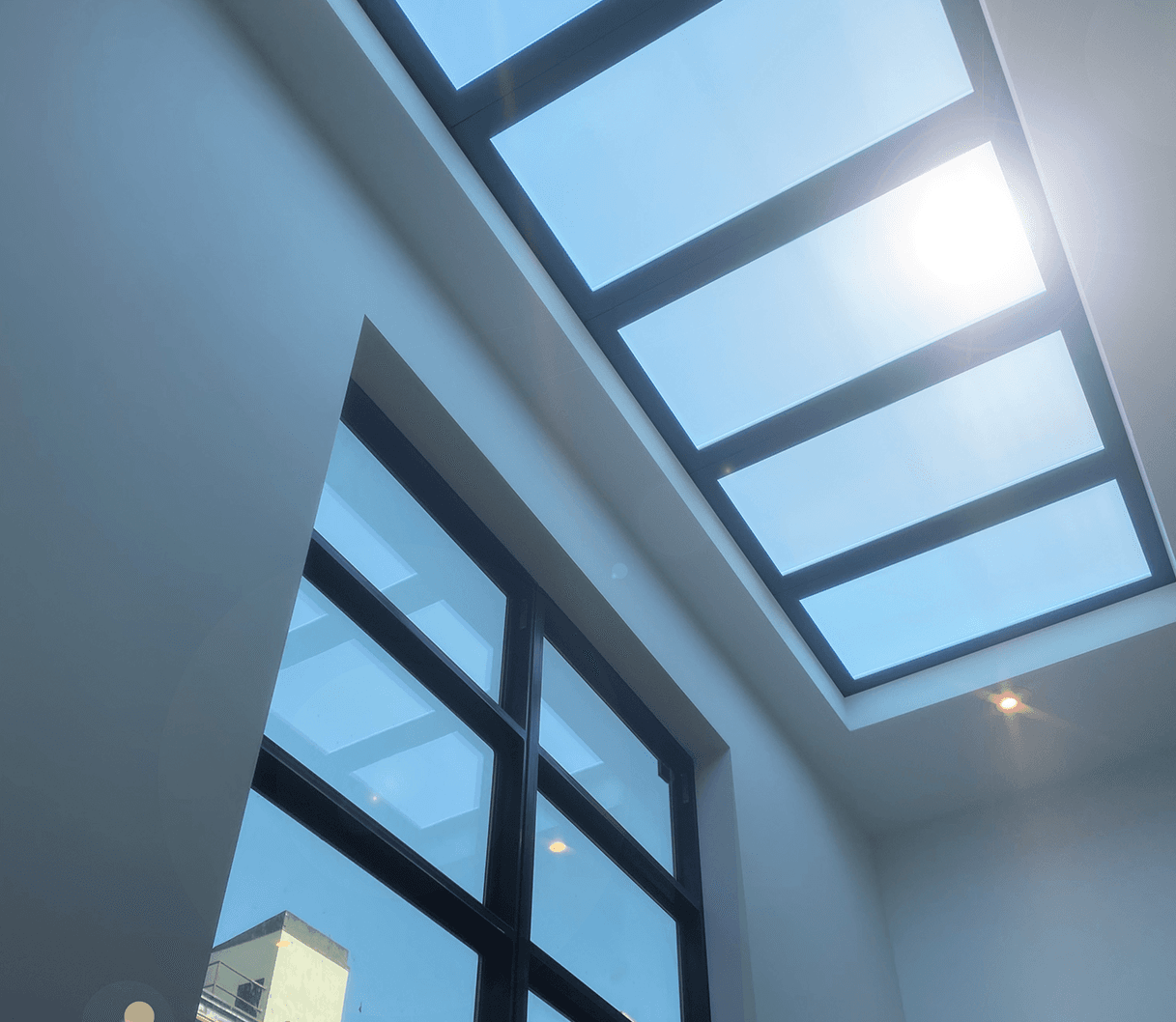
Sun Simulation
Visible sun disc with sunbeams and shadows
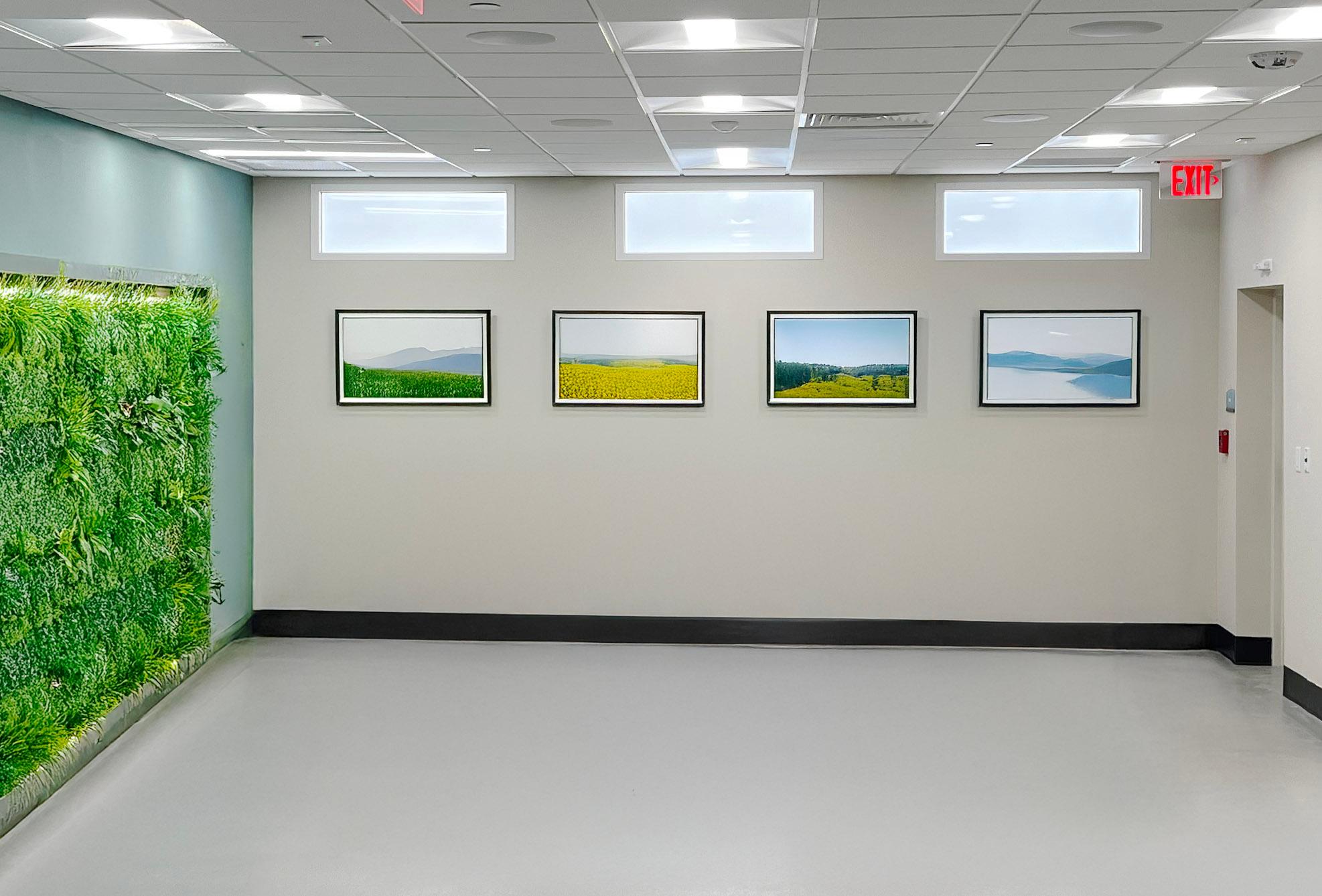
Full Spectrum
4+ LED channels, 2200K–200,000K range
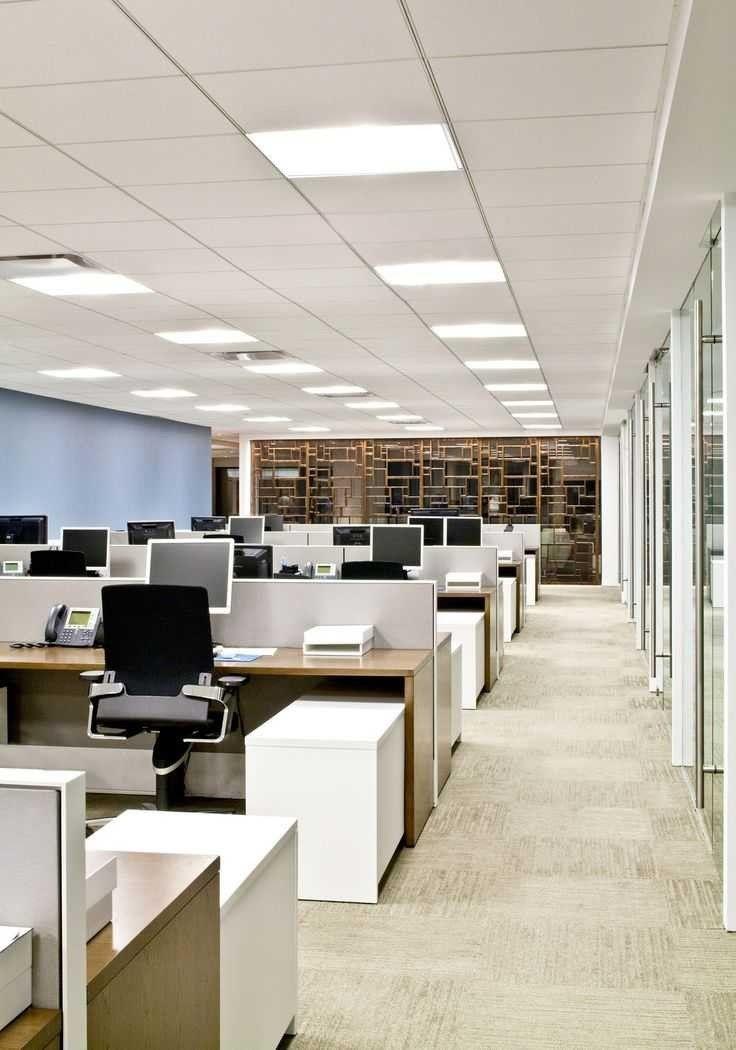
Tunable White
2 LED channels, 2700K–6500K range
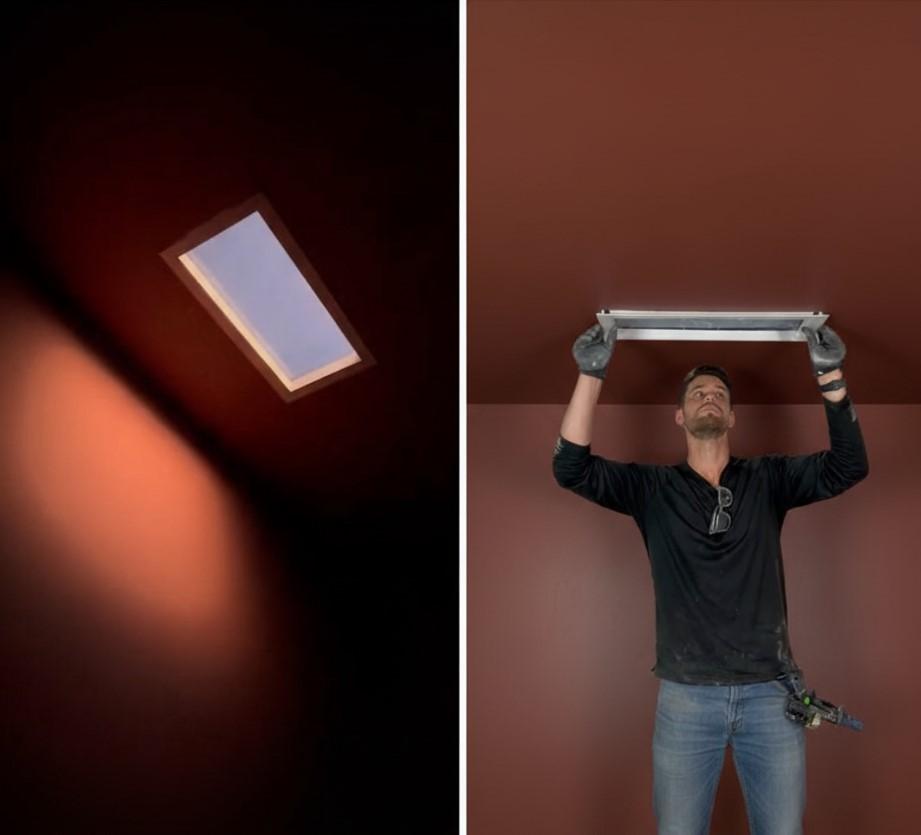
Rayleigh Scattering
Visual blue effect, limited circadian benefit
Backlit Image
Static printed image, decorative only
Sun Simulation
Visible sun disc with sunbeams and shadows
Full Spectrum
4+ LED channels, 2200K–200,000K range
Tunable White
2 LED channels, 2700K–6500K range
Rayleigh Scattering
Visual blue effect, limited circadian benefit
Backlit Image
Static printed image, decorative only
Sun Simulation
Visible sun disc with sunbeams and shadows
Full Spectrum
4+ LED channels, 2200K–200,000K range
Tunable White
2 LED channels, 2700K–6500K range
Rayleigh Scattering
Visual blue effect, limited circadian benefit
Backlit Image
Static printed image, decorative only
Indoor Sun Simulators
These premium systems create a visible sun disc and cast soft, directional shadows into the room—just like real sunlight through a window. They use specialized collimating optics to project parallel light rays that appear to originate from infinity, creating the unmistakable experience of actual sunshine.
Key Characteristics
- Soft shadows: Objects cast defined, directional shadows like real sun
- Infinite depth perception: The "sky" appears to extend infinitely
- Parallax effect: Sun position appears to change as you move
- Ceiling plenum depth requirements: 11"+
- Color tunable sky: Provides the appearance of sunset in the evening, and when dimmed to a very low level provides the experience of a moon against a dark sky
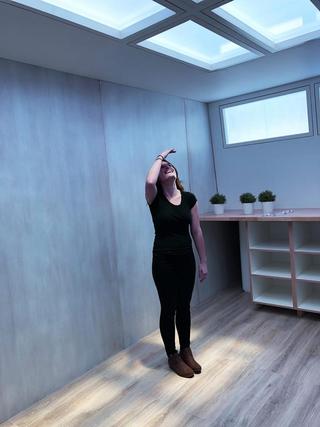
Natural light and shadows from sun simulation skylights
Best For
Executive offices, luxury residential, hotel lobbies, spa treatment rooms, and architectural focal points where the "wow factor" justifies the investment.
Full Spectrum Circadian Skylights
These advanced LED panels use 4 or more LED chip types to reproduce the full range of natural daylight—from warm candlelight (2200K) to deep blue midday sky (200,000K and above). Unlike basic tunable white systems, they can actually simulate a clear blue sky, not just cool white light. With only 3.5" plenum depth required (fits between wall joists), these can be recessed or surface mounted for maximum installation flexibility.
Why Full Spectrum Matters
- True blue sky simulation: CCT range extends beyond 10,000K for realistic sky color
- High CRI across the range: Maintains 90+ CRI from warm to cool—no color quality trade-offs
- Follows the daylight curve: Colors track natural daylight, avoiding the pink/green tints of 2-chip systems
- Circadian scheduling: Automated color and intensity changes based on time of day
Enhanced Window/Skylight Features
These fixtures often include features to enhance the window/skylight effect and simplify installation:
- Built-in regress: Makes construction/installation simple with integrated mounting
- Reflective layers: Create distant focal points that simulate depth and sky perception
- Gaskets and spacers: Mimic actual windows and skylights for authentic appearance
- Built-in power supplies: Eliminate the need for remote power supply locations, simplifying electrical installation
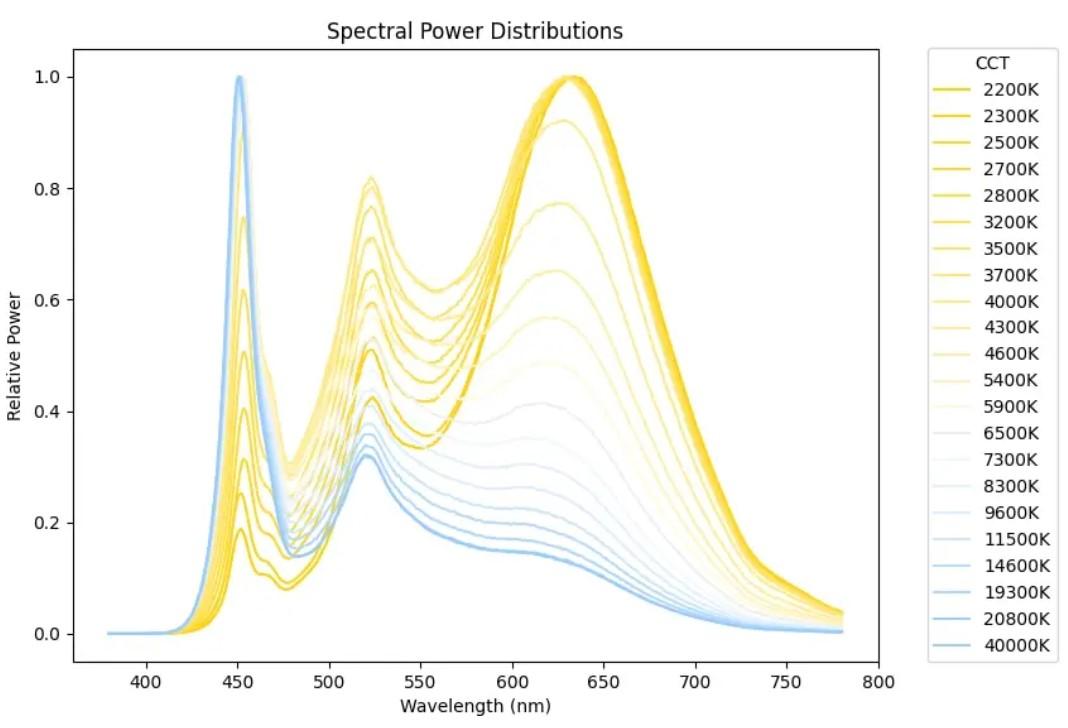
Full spectrum (4+ channel) spectral power distribution across all CCTs (2200K–200000K). Note the smooth, continuous spectrum with overlapping LED channels.
Best For
Healthcare facilities, offices prioritizing employee wellness, residential basements and windowless rooms, senior living, anywhere circadian health and realistic sky appearance matter.
Why Extended CCT Range Matters: The Blue Sky Advantage
Both sun simulation and full spectrum systems share a critical capability that sets them apart from basic tunable white panels: they can reproduce actual blue sky color.
Clear blue sky typically measures 8,000K to 200,000K+. Basic tunable white panels max out around 6500K—technically "cool white" but nowhere near actual sky blue. Full spectrum and sun simulation systems bridge this gap, enabling realistic sky simulation and maximizing circadian impact during daytime hours.
Beyond aesthetics: Blue sky simulation isn't just about visual appeal—it directly impacts circadian health. Higher CCT light (8,000K+) produces significantly more melanopic content per lumen, meaning you can achieve WELL v2 m-EDI targets with less total light output. This reduces glare, lowers energy consumption, and improves visual comfort while delivering the circadian stimulus your body needs during daytime hours. Explore the research on circadian lighting benefits →
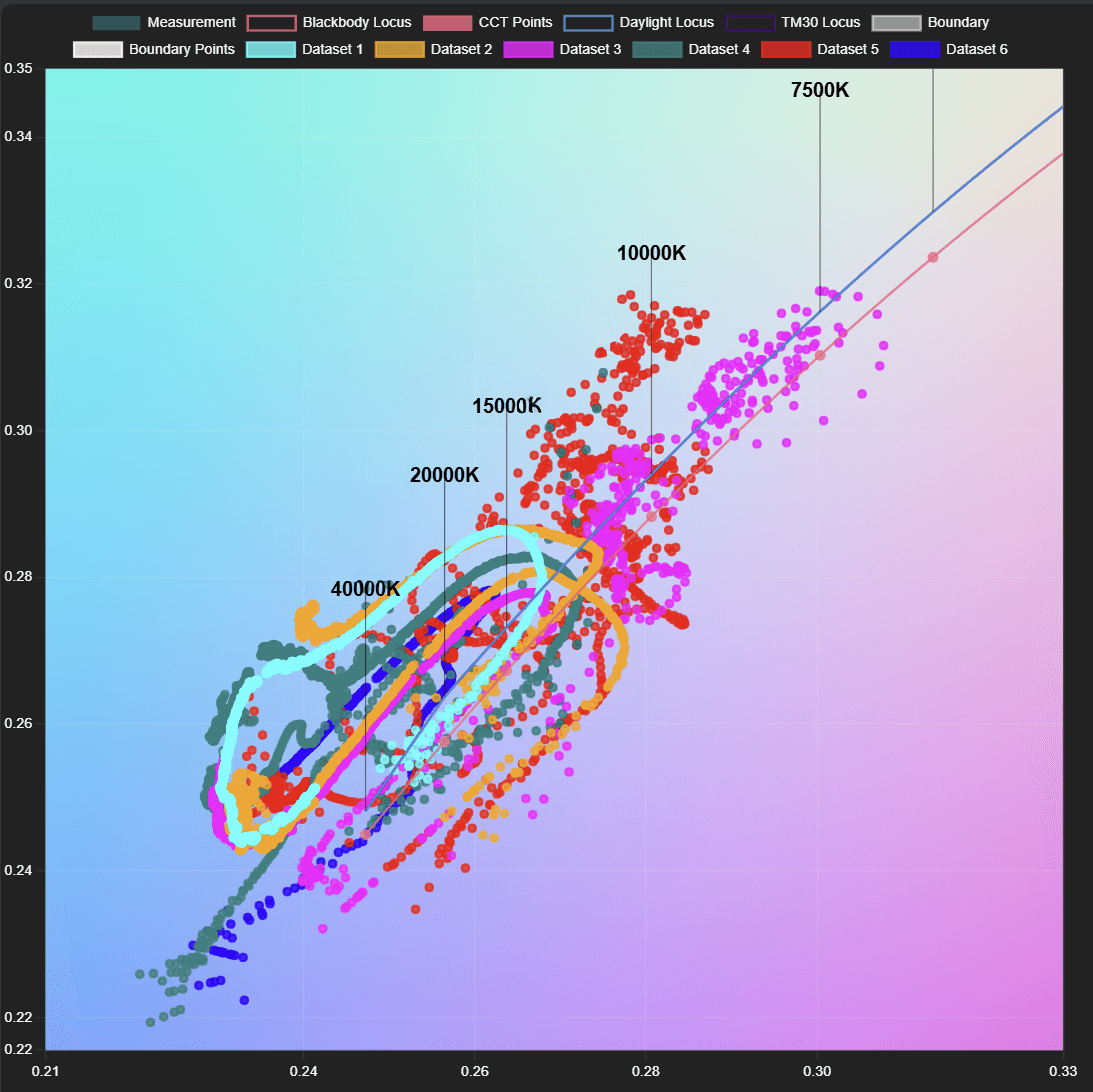
Actual sky color measurements over several days (each color = one day). Clear blue sky typically measures 8,000K to 200,000K+—well beyond the 6500K limit of tunable white systems.
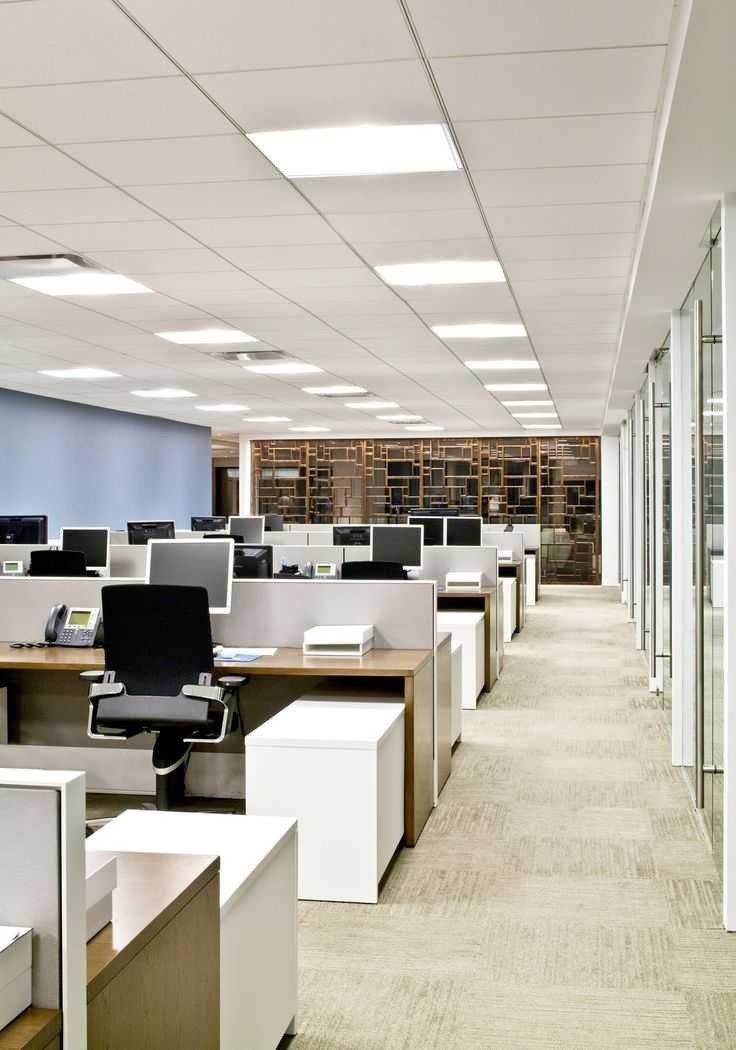
2-Chip Tunable White Panels
These systems mix two LED types—warm white and cool white—to adjust color temperature. They're fine for basic "warm evening, cool daytime" settings but have fundamental limitations for sky simulation and circadian lighting. Requires 1–4" plenum depth plus space for power supply.
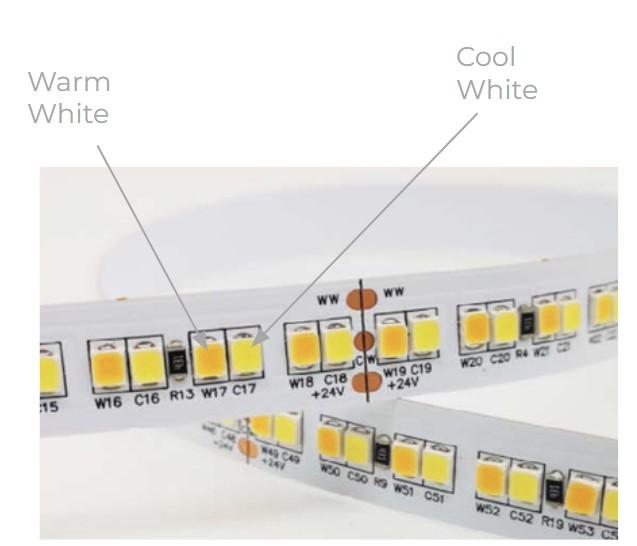
Tunable white LED strips use alternating warm and cool white chips. Mixing these two creates the color temperature range.
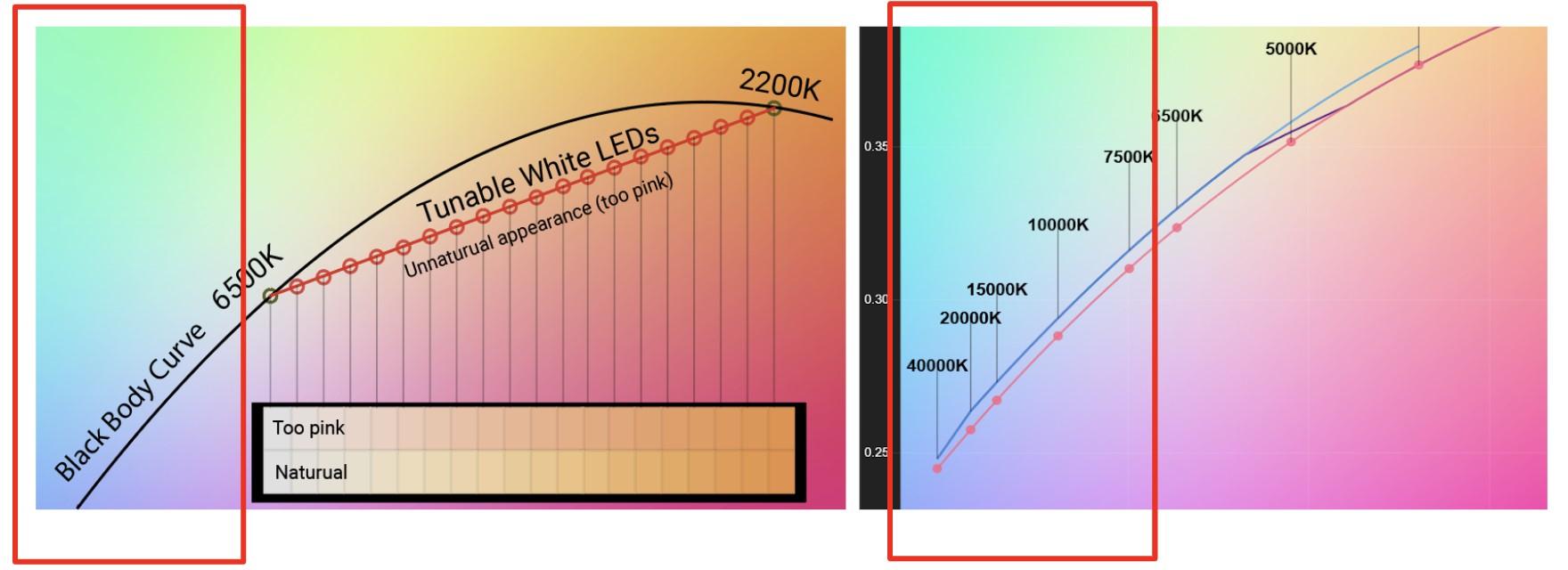
Left: Tunable white mixes colors in a straight line, causing pink tints. Right: The blue sky range (7500K–200000K) is entirely missing.
Limitations to Understand
- No blue sky: Maximum CCT is typically 6500K—cool white, but not sky blue
- Color quality issues: Mixing two points creates a straight line in color space, not the natural daylight curve—intermediate temperatures can appear pink/green
- CRI varies: Color rendering often drops at extreme settings
- Limited circadian impact: Without extended blue range, melanopic output is capped
Why These Don't Look Like Windows or Skylights
Even high-quality tunable white panels typically lack the visual cues that make a fixture read as a window or skylight:
- Flush installation: When installed flush with the ceiling, they look like normal office lights. A regress is one of several important factors needed to create a skylight illusion
- Lack of blue sky: Cannot reach the blue-enriched CCT range of actual sky
- Flat appearance: Matte non-reflective surface looks flat and provides no depth perception
Best For
Basic office environments where simple warm/cool adjustment is sufficient. Not recommended for sky simulation, healthcare, or applications where realistic daylight appearance matters.
Backlit Image Panels
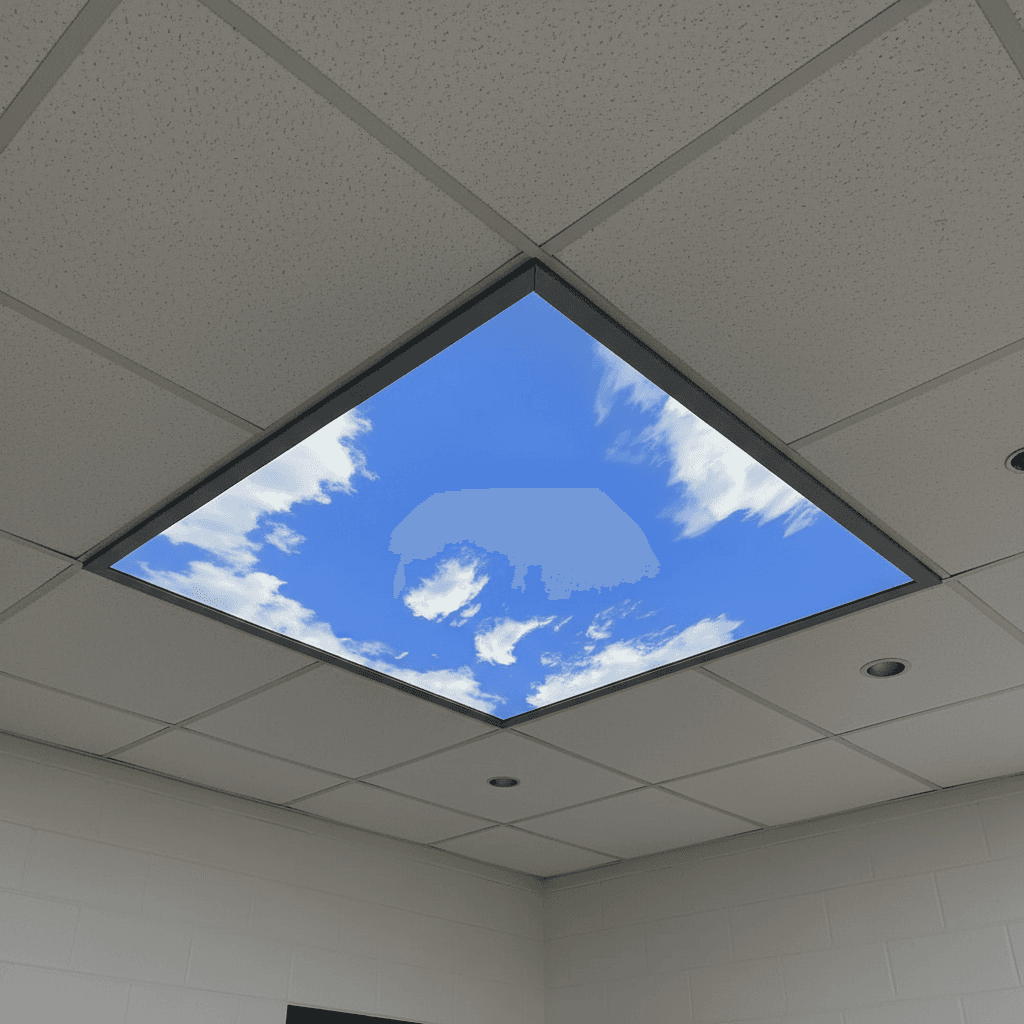
These budget options feature a high-resolution photograph of clouds or sky printed on a diffuser (silkscreen or film), backlit by standard LEDs. They're essentially decorative light fixtures with a sky image. Requires only 1" plenum depth plus space for power supply.
The Photo vs. Reality Problem
Backlit image panels look convincing in product photography—a camera sees them similarly to how it sees a real skylight. But in person, your eyes immediately recognize the flat, static image. There's no depth, no parallax, no change throughout the day. The "Instagram vs. reality" effect is significant.
Limitations
- Flat appearance: No depth perception—your brain instantly recognizes it as a backlit poster
- Static image: Never changes throughout the day; novelty wears off quickly
- Fixed color temperature: No circadian benefit—typically 4000K–5000K
- Low CRI: Usually 80–85; colors appear washed out
Best For
Dental offices (patient distraction during procedures), DIY projects, purely decorative applications where realistic appearance and wellness benefits aren't priorities.
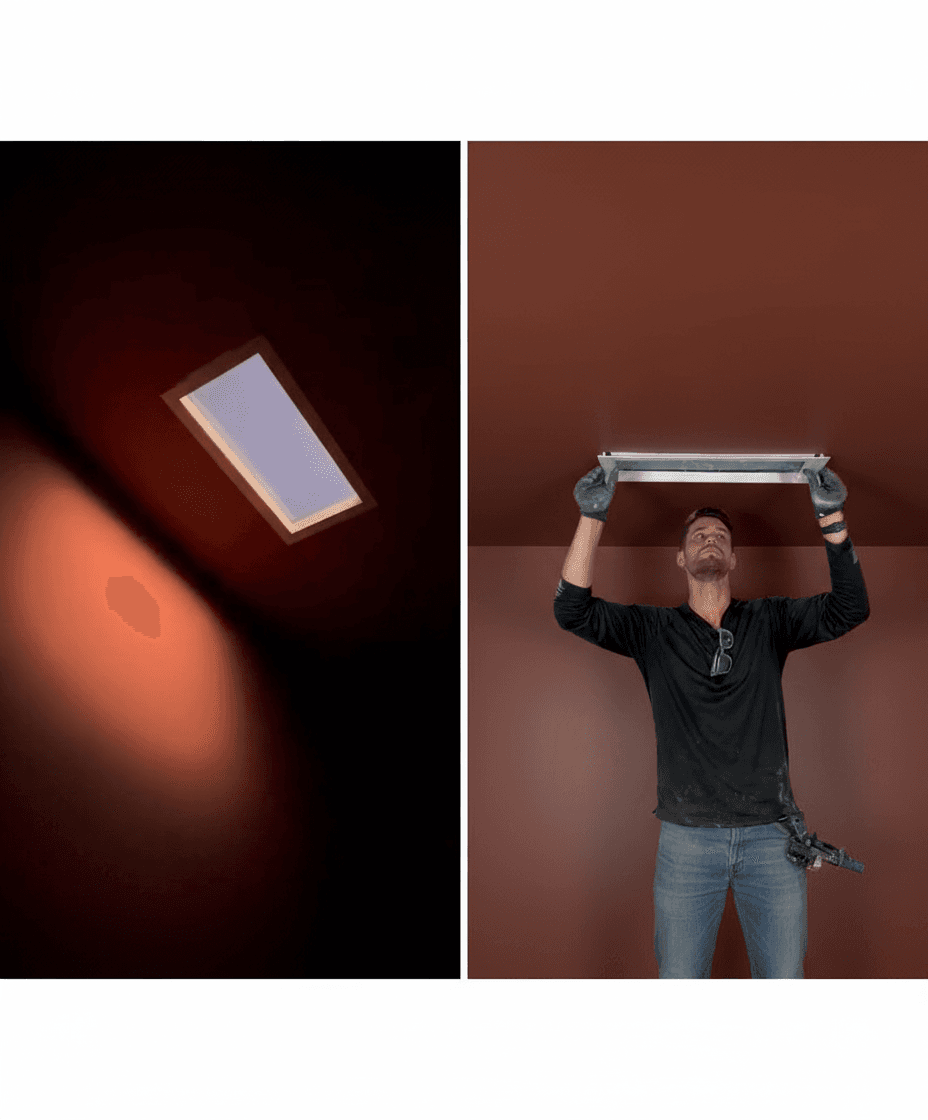
Rayleigh Scattering Panels
These panels use a nanoparticle-infused acrylic layer that scatters blue light (mimicking atmospheric Rayleigh scattering) while allowing warmer light to pass through. The effect creates a blue gradient that resembles sky, but with significant trade-offs in light quality and installation flexibility.
Important Considerations
Most Rayleigh scattering panels are manufactured overseas and may not carry UL or ETL safety certifications required for commercial installations in the US. Verify certification status before specifying for any project.
Significant Limitations
- Light quality mismatch: The blue appearance comes from scattering, but most emitted light is actually lower CCT—what you see doesn't match what your body receives. Limited circadian benefit despite blue appearance
- No sun disc: Cannot create visible sun or sunbeams. Must be mounted facing a wall to avoid direct glare into eyes. Cannot be recessed into a wall
- Limited placement options: Wall-facing installation requirement prevents central ceiling placement, where general illumination is typically most needed for workspace coverage
- Purple sky problem: Tunable white versions produce unnatural purple/magenta sky at most CCT settings. Only looks realistic at one specific setting
- Plenum depth: Requires 4–6"+ depth for installation
- Size limitations: Smaller panels (under 2×2 ft) are less convincing. Effect works better at larger sizes
- Limited CCT range: 1–2 LED channels only; cannot achieve full daylight spectrum or true blue sky CCT
Best For
Budget-conscious residential projects where visual novelty matters more than light quality or circadian performance. Not suitable for healthcare, commercial, or any regulated installation—without UL, ETL, or CSA certification, these products do not meet NEC (National Electrical Code) requirements and cannot be approved by authorities having jurisdiction in North America.
Quick Comparison: Which Type Do You Need?
| Feature | Sun Simulation | Full Spectrum | Tunable White | Rayleigh | Backlit Image |
|---|---|---|---|---|---|
| Price Tier | Luxury | Architectural | Standard | Budget | Decorative |
| LED Channels | 5+ | 4+ | 2 | 1–2 | 1 |
| CCT Range | 3000K–200,000K+ | 2200K–200,000K | 2700K–6500K | 2700K–6500K | Fixed (4000K–5000K) |
| Blue Sky | Yes | Yes | No | Visual only* | No |
| Visible Sun / Sunbeams | Yes | No | No | No | No |
| Scheduling | Yes | Yes | Limited | Limited | None |
| CRI | 95+ | 95+ | 80–90 | 80–90 | 80–85 |
*Rayleigh scattering panels appear blue visually but emit lower CCT light—circadian benefit is limited despite blue appearance.
Sky color synchronization: Sun Simulation and Full Spectrum systems have the extended CCT range (beyond 10,000K) needed to replicate actual outdoor sky color. This makes them compatible with outdoor sky sensors like SkySync, which measure real-time sky conditions (up to 200,000K+) and stream that data to indoor fixtures. Tunable white, backlit image, and Rayleigh scattering panels are limited to static or narrow CCT ranges and cannot track dynamic outdoor sky color.
Traditional vs Artificial Skylights
Traditional skylights bring in real sunlight. Artificial skylights simulate it. The right choice depends on what your building can accommodate and what you're trying to achieve.
| Traditional | Artificial | |
|---|---|---|
| Installation | Cut through roof, structural framing, flashing, weatherproofing | Ceiling grid or drywall mount, electrical only, no roof penetration |
| Location | Top floor with direct roof access only | Any floor, any room, including basements |
| Weather | Depends on sun, clouds, time of day; nothing at night | Consistent output regardless of conditions |
| Heat gain | Solar heat increases cooling load; heat loss in winter | No solar gain; minimal LED heat |
| Control | Shades or electrochromic glass; can't change spectrum | Full control—intensity, CCT, scheduling |
| Circadian | Natural daylight is ideal but uncontrolled | Programmable day/night cycles, melanopic targets |
When to Use Each
Artificial skylights required: Basements, interior rooms, floors below the roof, MRI suites, shielded spaces, retrofits where roof work is impractical, hot climates with high cooling loads, WELL/LEED projects requiring documented circadian performance.
Traditional skylights preferred: When roof access exists, climate is moderate, and precise light control isn't needed. Real sky visibility has psychological value artificial can't fully replicate.
Both: Many buildings use traditional skylights in atriums and common areas, artificial in interior offices and patient rooms.
Where Artificial Skylights Get Used
Anywhere real daylight is hard or impossible to get—MRI suites, basements, deep-plan offices, hotel spas. If there's a ceiling and no roof access, someone's probably considered one.
Healthcare
Healthcare is where artificial skylights make the most obvious sense: strict codes, no windows, stressed patients, staff who spend entire shifts under artificial light.
Imaging and treatment rooms
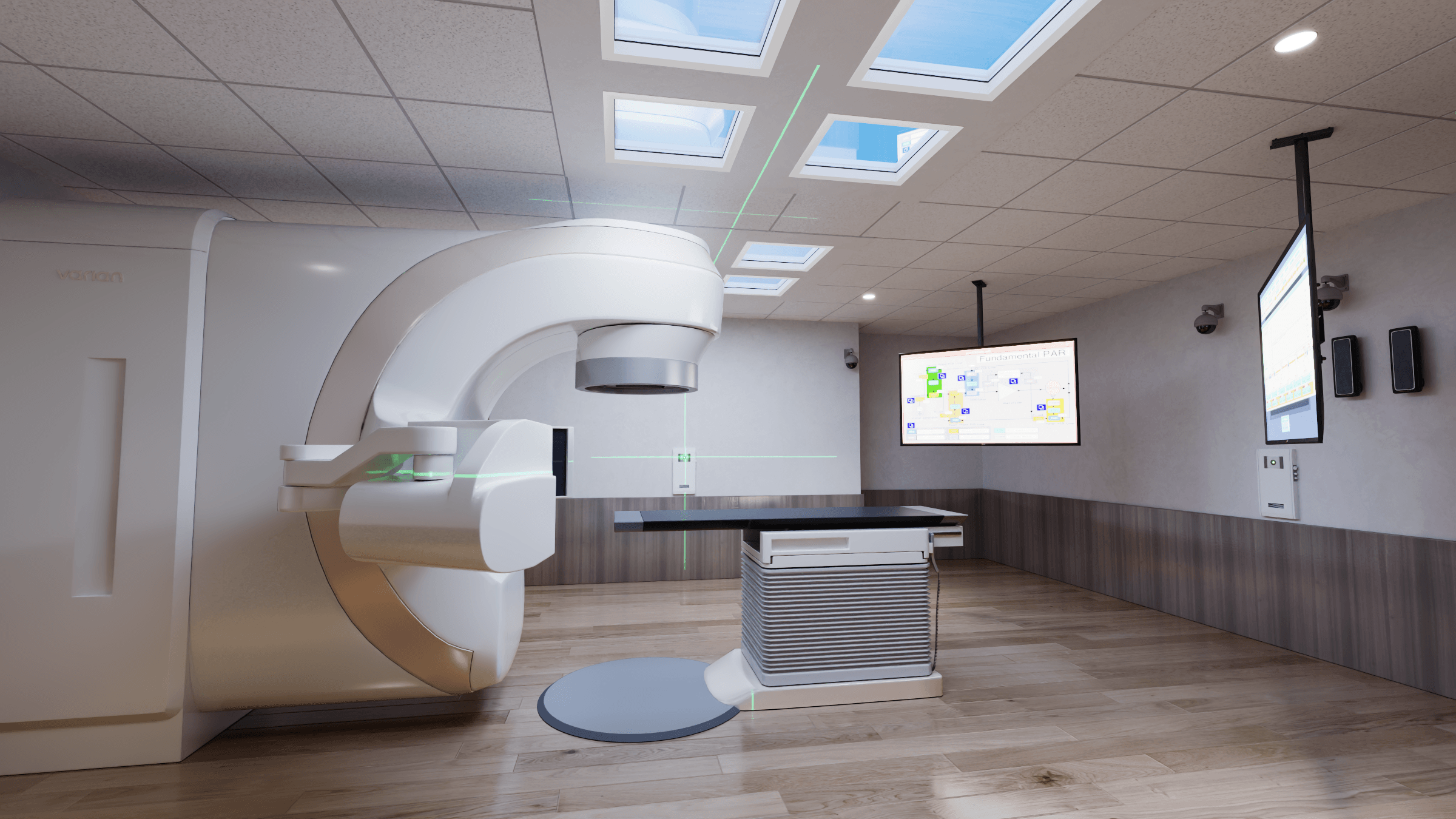
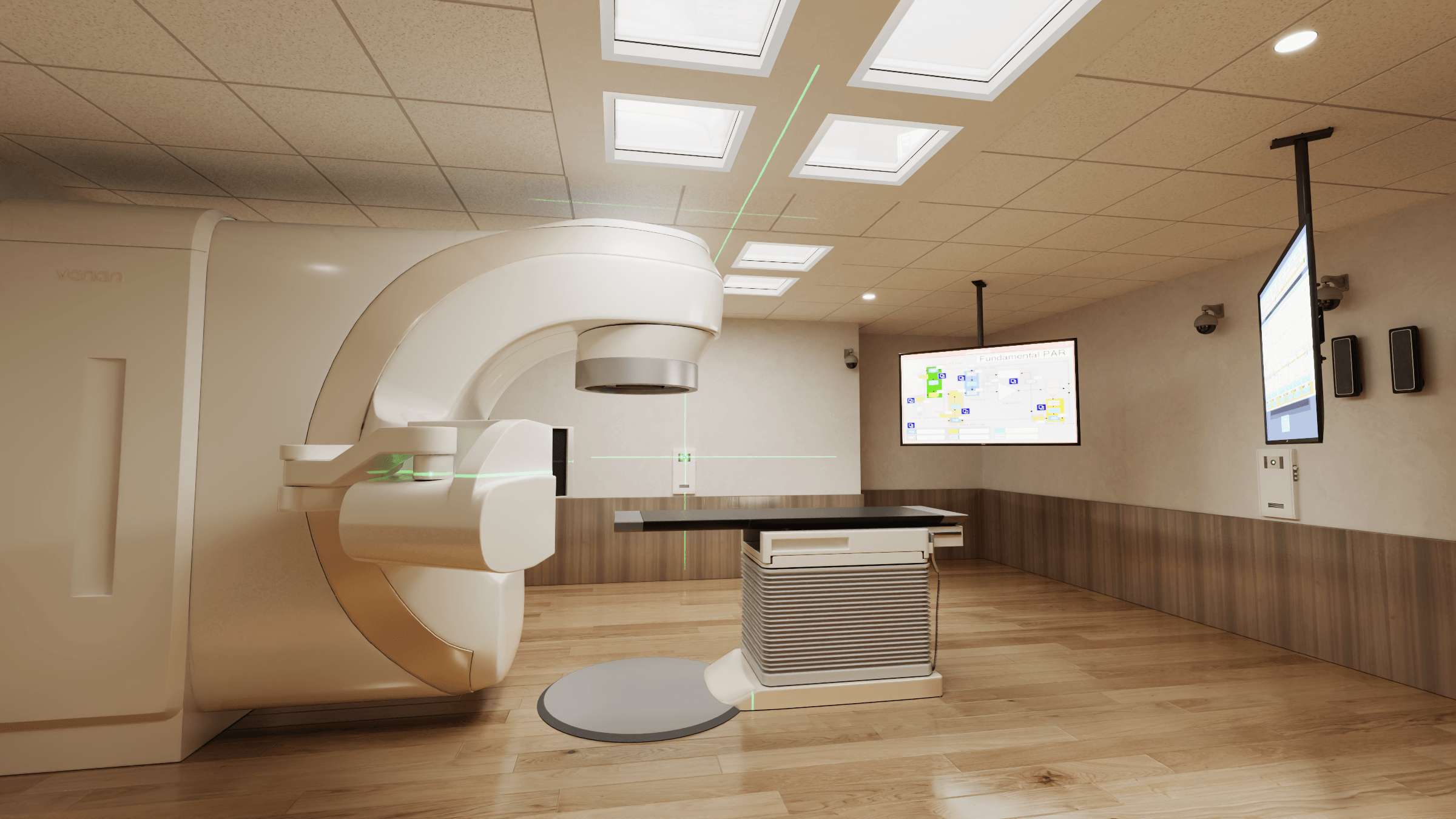
MRI suites and radiation oncology rooms are windowless by design—shielding comes first. A non-ferrous artificial skylight opens the ceiling without touching the magnet or compromising the build-up. The room feels less like a bunker.
Interior patient rooms
Beds in the middle of a floor plate get no time cues. An artificial skylight with circadian scheduling gives staff a simple tool: bright cool light when patients should be awake, warm dim light when the unit needs quiet.
Behavioral health
Windows here are often tiny or heavily protected, and some luminaires pose ligature risks. Anti-ligature artificial skylights with tamper-resistant trim bring a sense of sky while staying flush and robust.
Staff and support areas
Operating rooms, infusion bays, family waiting areas, break rooms—anywhere people spend hours in spaces that never see outside. The staff wellness case is often as strong as the patient case.
Commercial Offices
Modern office buildings push more floor area away from the façade. Great for rentable square feet, bad for humans.
Core offices and conference rooms
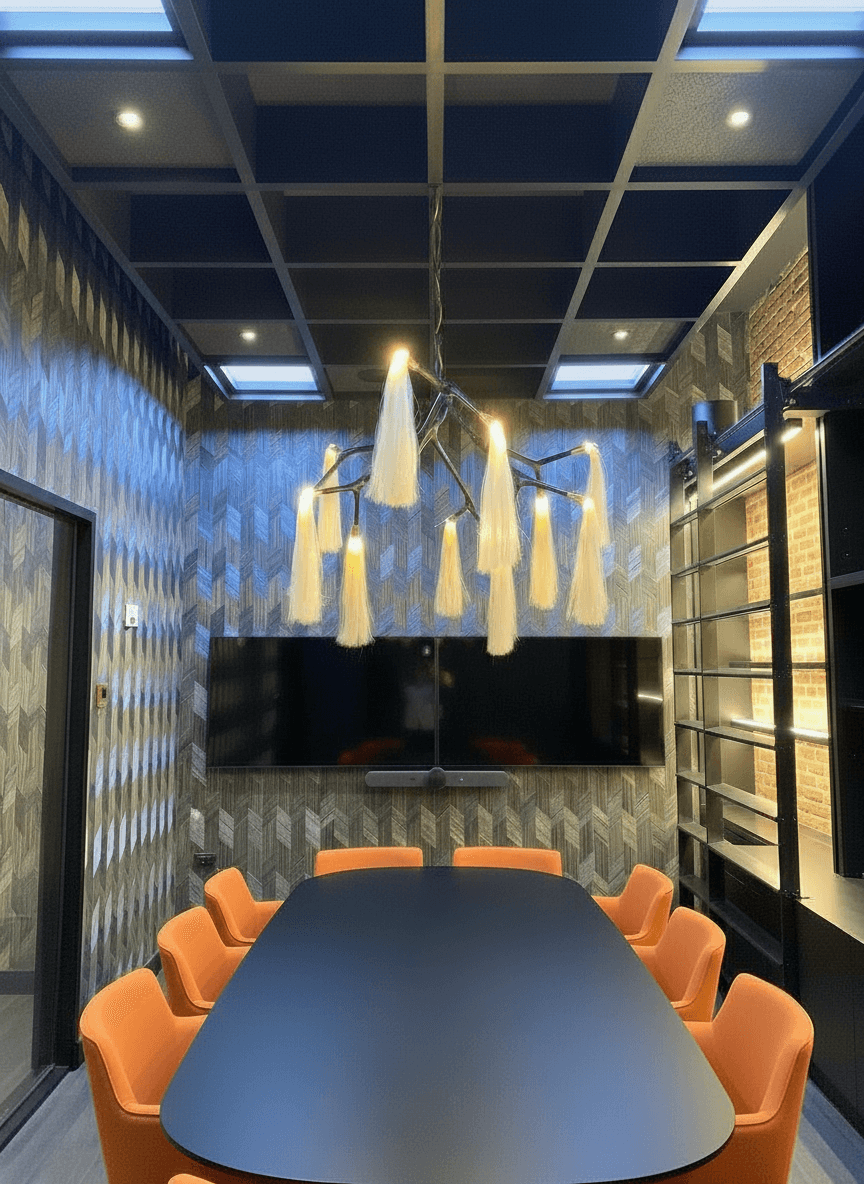
Interior offices, huddle rooms, basement meeting spaces—they always feel like B-tier real estate. An artificial skylight over the table changes the read completely.
Wellbeing and certification
Companies need to prove they care about light, not just hit a lux number. Circadian-capable artificial skylights that publish melanopic output give workplace teams something concrete for WELL or LEED.
Executive and focus spaces
Boardrooms, C-suite offices, meditation rooms. A sun-simulation fixture is both wellness feature and architectural statement—looks expensive, feels good to sit under.
Open floor plates
Arrays of circadian panels can carry daylight deep into a plan, but only if every fixture matches. Tight bin tolerances and proper controls matter here.
Residential
Homeowners are figuring out they're not stuck with the rooms that have windows. An artificial skylight can turn leftover square footage into real living space.
Basements
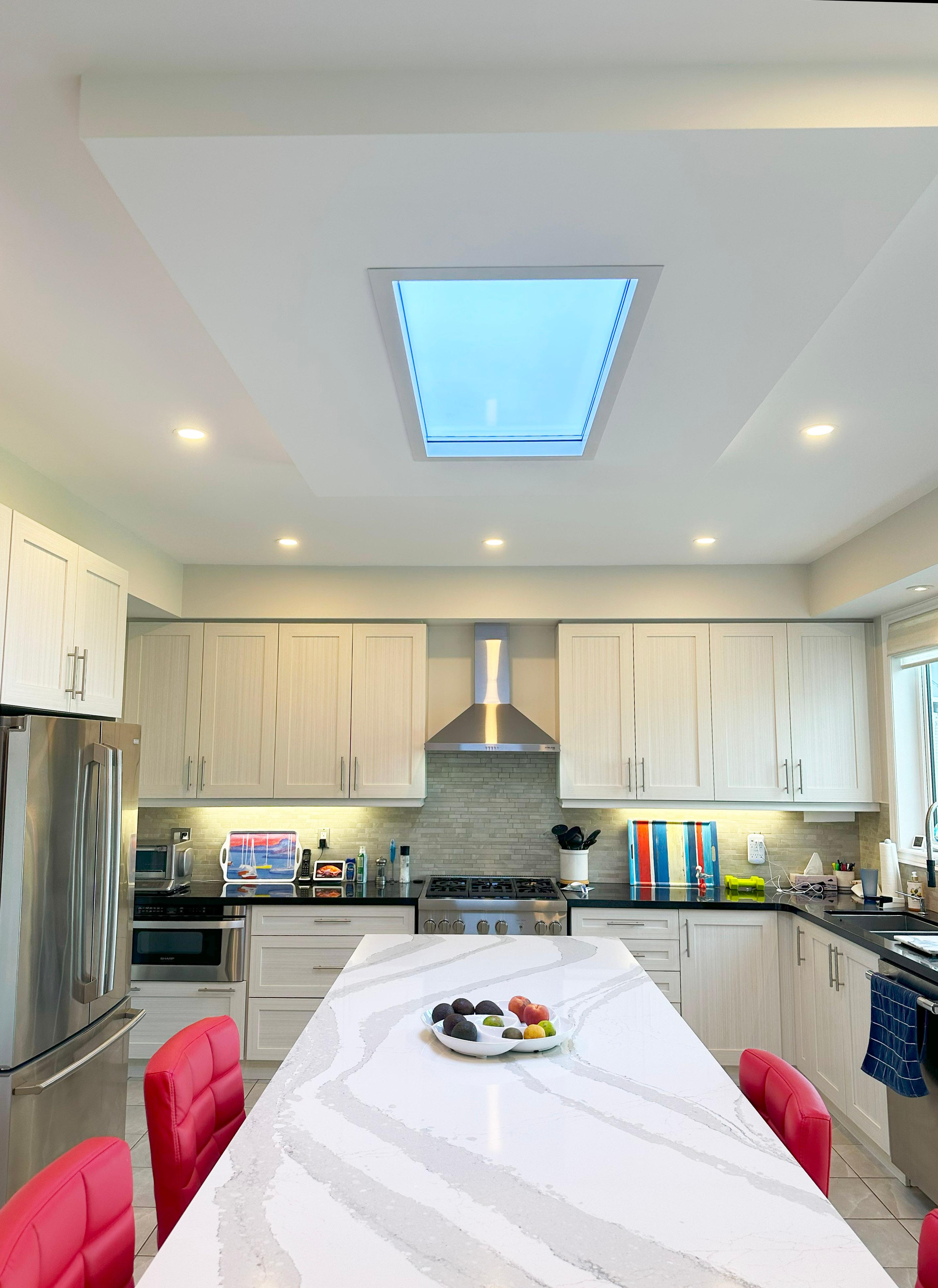
Basement offices, gyms, media rooms—even with nice finishes, they still feel like basements. An artificial skylight over the desk or treadmill makes the room feel like part of the house instead of exile.
Interior bathrooms
Primary baths often sit mid-plan with no path to a real window. A ceiling window over the tub or vanity creates that instant "this must be an exterior room" feeling—fresher, more expensive.
Wellness and luxury spaces
Yoga rooms, meditation corners, home spas. Light that runs warm and calm at night, bright and cool in the morning. In higher-end homes, a sun-simulation fixture becomes the thing guests ask about.
Other Applications
Retail: Deep-plan stores and back-of-mall units use artificial skylights to break up ceilings and make spaces less boxy. High-CRI daylight renders products accurately.
Hospitality: Interior guest rooms, corridors, spas, wellness centers. Hotels use them anywhere a sense of sky fits the story but the architecture doesn't allow real openings.
Education: Windowless classrooms, testing centers, libraries, study halls. Consistent good light matters when students are indoors for hours.
Everything else: Conference centers, senior living, underground corridors, transit stations—anywhere people spend time but can't see out.
Installation Methods
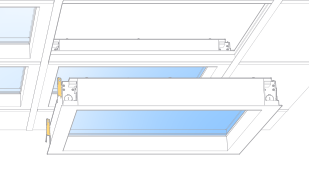
Grid Ceiling (ACT)
Drop-in to standard 2×2 or 2×4 ft acoustic tile grid.
15/16" or 9/16" T-bar grid
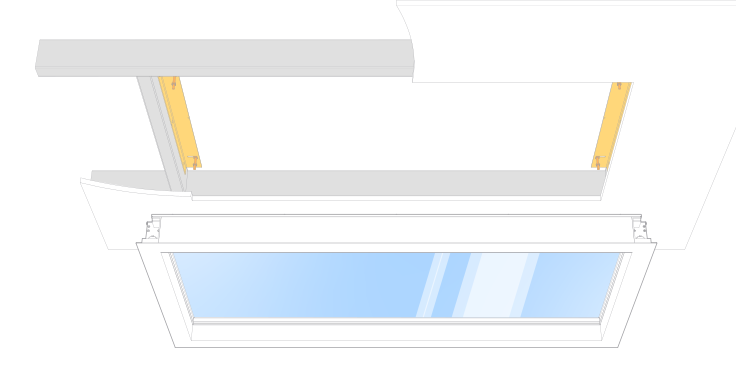
Hard Ceiling (Drywall)
Mounts to wood joists or steel framing behind drywall.
4"+ wood joists or C-channel
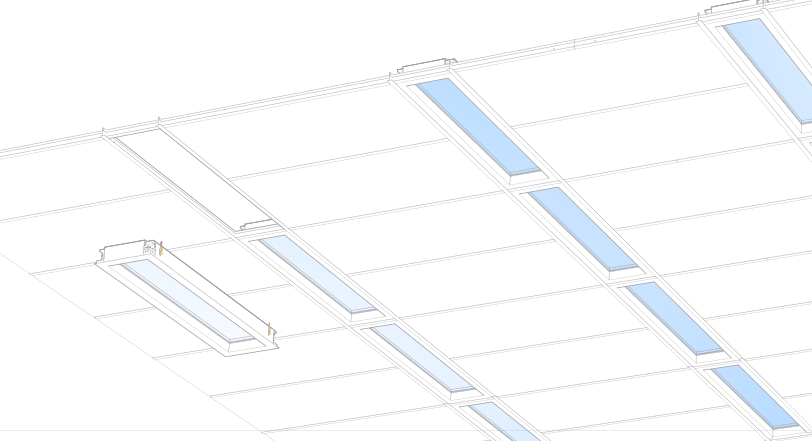
Armstrong TechZone
12" module spacing for refined grid appearance.
Armstrong 12" TechZone only
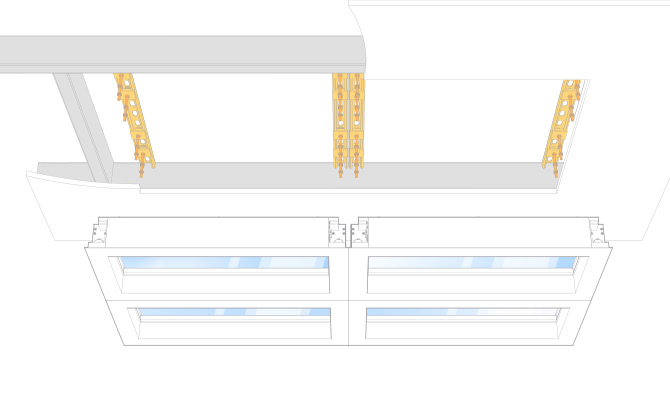
Unistrut Array
Multi-fixture arrays on Unistrut framework.
Unistrut by others
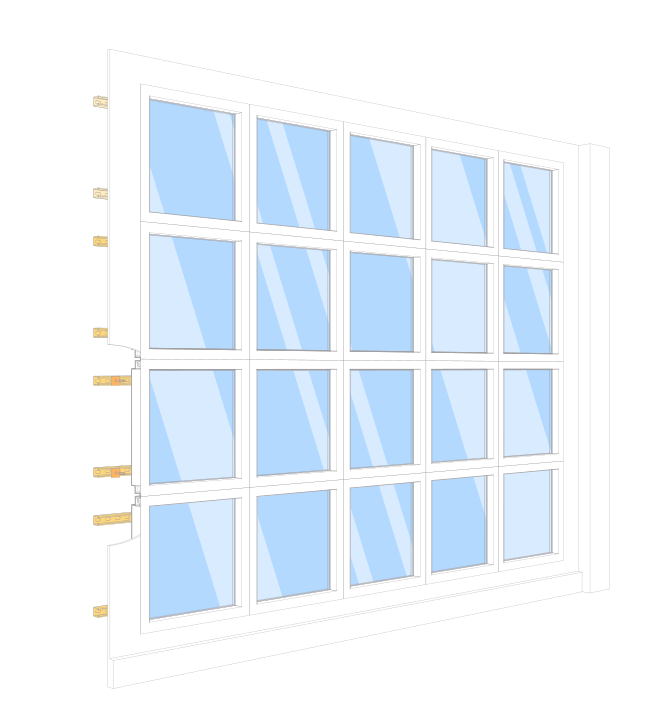
Wall Mount
Vertical mounting as sky windows.
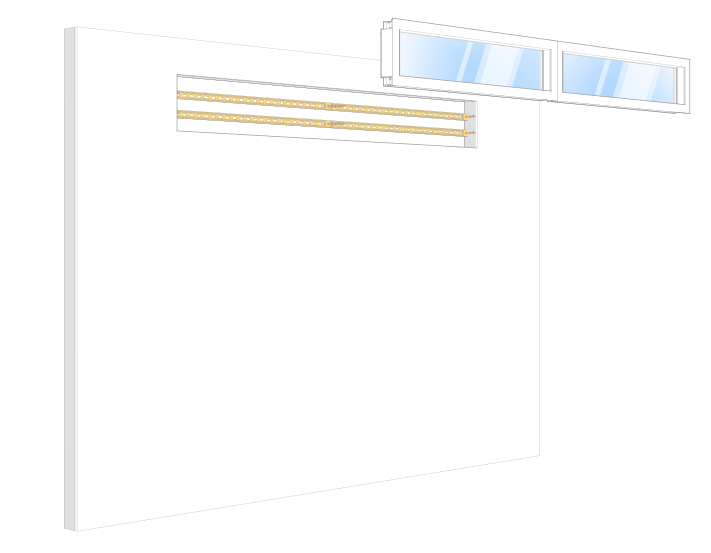
Clerestory
Upper wall mounting where wall meets ceiling.
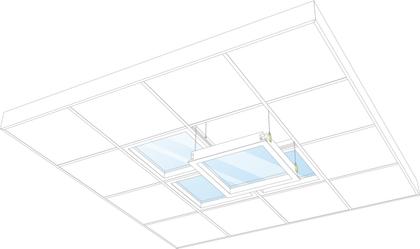
Suspended Cloud
Floating array below structural ceiling.
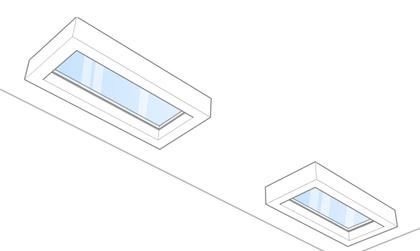
Surface Mount
Direct ceiling mount when no plenum available.
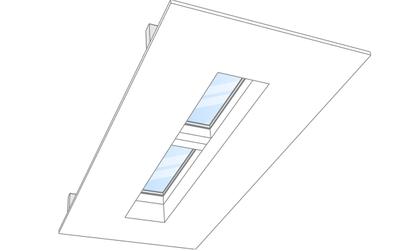
Light Well
Flush drywall lay-in installation.
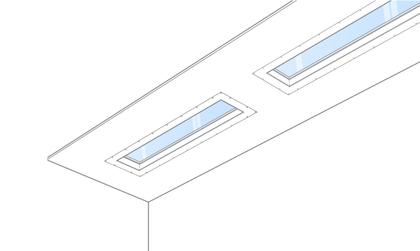
Behavioral Health
Anti-ligature, tamper-resistant, impact-rated.
How to Choose an Artificial Skylight
It comes down to three things: what you're trying to achieve, what your ceiling can accommodate, and how much you want to spend. Everything else follows from there.
Start with the goal, not the product
The first question is what you're trying to achieve: architectural impact or wellness at scale.
Sun simulation systems—like Innerscene Virtual Sun or CoeLux 45 HC—create actual beams and shadows. A defined sun disc in what appears to be infinite sky. These are architectural statements: a boardroom centerpiece, a spa focal point, a residential showpiece. The goal is dramatic realism—guests stop and look up.
Full spectrum panels—like Circadian Sky—are designed for circadian health and coverage. Full spectrum (4+ channel) LED systems with wide CCT range, programmable schedules, and melanopic output that supports your body's natural rhythms. These work across entire floors of healthcare facilities, office buildings, and residential spaces where the value is how people feel over time.
For larger installations with multiple fixtures, panel systems offer the advantage of seamless arrays—every unit matched perfectly in color and output. Sun simulation systems are typically deployed as single focal points or small groupings where each fixture makes an individual statement.
Check your physical constraints early
Ceiling height affects different systems in different ways. Sun simulation systems like Virtual Sun work well at standard residential ceiling heights (8–9 feet)—the optics create a convincing effect at closer viewing distances. At higher mounting heights, the sun disc appears larger. Full daylight spectrum panels work at any ceiling height since they don't rely on the same optical depth effects.
Plenum depth is another common constraint. Slim circadian panels fit in 3–4 inches. Most systems need 7–12 inches. If you have less than 3 inches above the ceiling, you'll need surface-mount or custom solutions.
Ceiling type affects installation cost more than product cost. Drop ceilings (ACT grid) are simple—most artificial skylights drop right into a standard 2×2 or 2×4 opening. Drywall means backing, blocking, and more labor. Recessed installations look cleanest but need the most depth and the most coordination.
Know which specs actually matter for your application
Spec sheets for artificial skylights can run long. Here's what to focus on depending on your priorities. For the science underneath these numbers—why sky color runs so far above 6500K, what Duv and MacAdam steps actually measure, and how depth perception exposes a flat panel—see replicating natural daylight, which ends with a ten-point checklist you can hold any product against.
If circadian performance is the point
Melanopic EDI (m-EDI) measures circadian-effective light at the eye. WELL v2 targets ≥250 m-EDI during daytime hours. The key insight: higher CCTs produce more melanopic content per photopic lumen, so you can hit m-EDI targets with less total light—reducing glare, lowering energy consumption, and improving visual comfort. Systems limited to 6500K require significantly more lumens to achieve the same circadian effect as systems reaching 10,000K+.
Color temperature range (CCT) determines what kind of "daylight" you can create. This is where LED technology really matters:
- Basic tunable white panels (2-chip systems) typically range from 2700K to 6500K. That's warm white to cool white—fine for "office dim vs bright" but nowhere near actual sky. At 6500K, you're at overcast gray, not blue sky.
- Full spectrum panels (4+ channel systems) extend beyond 10,000K. This is where actual blue sky simulation becomes possible—clear sky typically measures 10,000K–25,000K overhead. These systems also maintain high CRI across their entire range.
If color accuracy matters (healthcare, retail, galleries)
CRI (Ra) of 90+ is the floor for anything serious. 95+ for healthcare skin assessment or retail apparel. R9 (red rendering) specifically should be 80+ if you're evaluating skin tone or selling anything red.
Color consistency across fixtures is measured in MacAdam steps. 3-step is fine for most commercial. If you're doing a 10+ fixture array and any variation will be visible, spec 1-step or accept that you'll notice differences.
If visual comfort and health matter
UGR (Unified Glare Rating) measures discomfort glare from lighting. Lower UGR values mean less glare and better visual comfort. While UGR depends on installation specifics (room size, mounting height, fixture placement), look for systems designed for low-glare performance—typically UGR <19 for offices, <16 for healthcare and precision work. Better optical design (diffusers, reflectors) reduces glare without sacrificing light output.
Flicker-free operation is critical but often overlooked. LED systems use PWM (pulse width modulation) dimming, which can cause visible flicker, headaches, and eyestrain if the frequency is too low. IEEE 1789-2015 defines safe thresholds. Professional systems operate at 20kHz+ (ideally 40kHz) to eliminate any perceptible flicker or stroboscopic effects. Avoid systems that don't specify their PWM frequency—if it's not listed, it's probably problematic.
Automated scheduling is essential for circadian benefit
Static lighting provides no circadian benefit. Circadian lighting requires blue-enriched light in the morning (suppresses melatonin, promotes alertness) and warm, dim light in the evening (allows melatonin production for sleep).
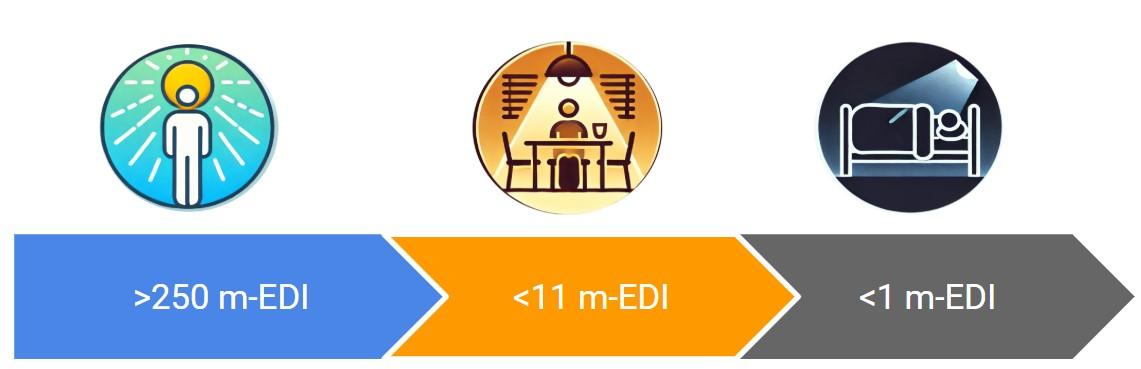
Recommended melanopic EDI (m-EDI) levels throughout the day: bright blue-enriched light (>250 m-EDI) during daytime, warm dim light (<11 m-EDI) in evening, minimal light (<1 m-EDI) for sleep.
What to look for in circadian scheduling
- Wall clock automation: Automatic CCT and intensity adjustment based on time of day.
- Sunrise/sunset scheduling: Adjusts based on actual sunrise/sunset times for your location.
- Evening dimming: Dims to 1–5% with warm CCT (2200K–2700K) for melatonin production.
- Built-in vs external control: Onboard scheduling is simpler; building automation integration offers more control.
Typical daily schedule:
- Morning: 3000K → 5000K+, increasing intensity
- Midday: Peak intensity, 6500K–15,000K
- Afternoon: Decreasing intensity, warming
- Evening: Low intensity, 2700K or lower
Get control integration right the first time
Confirm what control systems your building already uses before selecting a fixture. Most artificial skylights support multiple protocols:
- 0-10V — Basic analog standard. Single-channel controls dimming only; dual-channel adds independent CCT control.
- DALI-2 (Type 8 Tc) — Digital addressable protocol with native tunable white support. Two-wire connection, polarity insensitive.
- DMX512 — Standard for architectural and theatrical applications. Three-wire connection.
- Casambi — Wireless Bluetooth mesh. No control wiring required—ideal for retrofits.
Integration with Major Control Systems
Lutron
Lutron systems (HomeWorks QSX, Vive, RadioRA 3) integrate via 0-10V, DALI, or DMX depending on the platform.
- • HomeWorks QSX: Native DALI-2 support via QSX processors; DMX via QSE-CI-DMX interface
- • Vive: 0-10V interface modules for dual-channel CCT control
- • RadioRA 3: Requires 0-10V interface or third-party DALI bridge
- • DMX: QSE-CI-DMX or LUT-DMX2 interfaces for DMX512 control
nLight (Acuity Brands)
nLight systems primarily use 0-10V for fixture control.
- • 0-10V: nPP16 power packs provide 0-10V output; use two zones for dual-channel CCT control
- • DALI: nIO D4L DALI interface module connects DALI fixtures to nLight network
- • nLight AIR: Wireless version—still outputs 0-10V or DALI to fixtures
Wattstopper / Legrand DLM
Digital Lighting Management (DLM) supports multiple protocols.
- • 0-10V: LMRC-111 room controllers provide 0-10V output; LMRC-212 for dual-channel CCT
- • DALI: LMRC-611 DALI room controller; DMX-DALI-GW gateway (64 DALI channels)
- • DMX: DMX-DALI-GW gateway provides 512 DMX channels alongside DALI
Crestron
Commercial and residential automation with multiple protocol support.
- • 0-10V: CLW-DIMFLVEX in-wall dimmers; CLX-2DIMFLV8 or DIN-4DIMFLV4 modules
- • DALI: DIN-DALI-2 DIN-rail module for DALI-2 bus control
- • DMX: DIN-DMX-8 or third-party DMX interfaces
Control4 / Savant
Residential automation platforms typically integrate via:
- • 0-10V: Third-party 0-10V interface modules (e.g., from Noon, Ketra)
- • DMX: IP-to-DMX gateways for full color and CCT control
- • Casambi bridge: Casambi Gateway for IP integration with wireless fixtures
Factory pre-programming tends to be more reliable than field commissioning for circadian schedules—fewer variables, tested before it ships. Ask if the manufacturer can pre-load your schedule based on your location and use case.
How the architectural lighting market works
Key roles
- Manufacturer — Designs and builds fixtures, publishes specifications and photometry, provides submittals, warranty, and technical support through agencies and distributors.
- Lighting agency (independent rep) — Local sales/technical partner for one or more manufacturers. Assists design teams with product selection, samples/mockups, budgets, and submittals; coordinates pricing through distributors. Primary point of contact pre-bid.
- Distributor / wholesaler — Prices and purchases from manufacturers on behalf of the electrical contractor. Manages credit, logistics, consolidated shipping, and delivery to site.
- Designer / Architect (and Lighting Designer / Electrical Engineer) — Defines intent and performance: basis-of-design, approved equals, schedules, details, and control narrative.
- Contractor / Electrical contractor — Installs the system, submits shop drawings/submittals, requests alternates/RFIs, and coordinates controls, aiming, and startup/commissioning.
Typical U.S. project flow
- Designer selects basis-of-design and allowed equals.
- Agency supports with samples, photometry, budget pricing, and details.
- Distributor quotes to the electrical contractor; agency coordinates factory quotes.
- Electrical contractor purchases through distributor; manufacturer builds and ships.
- Submittals → approvals → delivery → install → programming and commissioning.
Regional variations
- United States — Independent rep/agency-distributor model is standard. Purchasing typically flows Manufacturer → Distributor → Electrical Contractor.
- Canada — Similar to the U.S., but many agencies also act as stocking distributors in some provinces (“agent-distributors”). Direct-to-EC purchases are more common on smaller projects.
- United Kingdom / EU — Fewer independent reps; manufacturers sell via national distributors or directly. Specs are driven by lighting designers and M&E engineers; tendering frameworks are common.
- Middle East — Manufacturer works through appointed dealers/in‑country partners. Large projects are specified by consultants with approved vendor lists; local compliance and logistics are critical.
- APAC — Mix of direct, distributor, and system‑integrator models depending on country; check local approvals and import rules early.
Regardless of region, involve your local lighting agency or distributor early—they know the procurement path, approved equals, and paperwork required in your market.
How to get pricing and purchase
Unlike consumer products, architectural lighting isn't typically sold direct online with visible pricing. Here's how to navigate the process:
For Commercial Projects (Offices, Healthcare, Hospitality)
- 1.Contact the manufacturer or their lighting agency. Find the rep for your region on the manufacturer's website. Provide: project type, location, ceiling conditions, approximate quantity, timeline.
- 2.Get spec guidance and budgetary pricing. The agency will recommend specific models and provide fixture cost estimates. This is non-binding but helps with early budgets.
- 3.Specify the product in your design docs. Your architect or designer includes the manufacturer, model number, and "approved equal" in construction drawings.
- 4.Electrical contractor gets formal quote. Once the project goes to bid, your EC contacts the agency or local distributor for binding pricing. The EC purchases through the distributor, not directly from the manufacturer.
- 5.Submittals and approvals. EC submits spec sheets and shop drawings to the design team for approval before ordering.
- 6.Order, delivery, install. Lead times range from 2–12 weeks depending on product complexity and customization. Factory support is typically available for commissioning and troubleshooting.
Shipping logistics: Larger fixtures and multi-fixture orders typically ship on pallets via freight. Distributors have loading docks and forklifts to receive shipments. If fixtures ship directly to a job site, you'll need either a loading dock or a liftgate truck plus easy street access for a pallet jack.
For Residential Projects (Homeowners, Small Renovations)
The process is simpler but still typically involves a local contact:
- ●Direct manufacturer contact: Some manufacturers will quote and sell directly to homeowners, especially for smaller orders (1–5 fixtures). Use the "Contact" form on their website.
- ●Local lighting showroom or rep: If direct isn't available, the manufacturer will connect you with their nearest agency or a showroom that carries their products.
- ●Installation: You'll still need a licensed electrician for installation. Share the spec sheet with your electrician early to verify ceiling compatibility and wiring requirements.
- ●Delivery logistics: Single fixtures may ship via standard parcel service. Multiple fixtures or larger sizes (2×4, custom) typically ship on pallets via freight, which requires a loading dock, forklift, or liftgate truck with street-level access for a pallet jack. Confirm delivery requirements when ordering.
Why agencies may not work with homeowners:
Lighting agencies are typically set up to support design professionals and contractors on multi-fixture commercial projects. A single residential fixture order doesn't generate enough commission to cover the technical support time (measurements, electrical questions, installation coordination) that homeowners typically need. Additionally, agencies have business relationships with distributors—selling direct to homeowners can bypass that channel. If you're working without a designer or electrician, try contacting the manufacturer directly or finding a local lighting showroom that handles retail sales. Note: Many agencies have exclusive territory rights, so manufacturers may only be able to quote directly if residential sales are specifically carved out in their agency agreements—otherwise they'll refer you back to their local rep or a showroom partner.
Why no published pricing? Architectural lighting pricing varies significantly based on quantity, customization (trim color, mounting, controls), project support needs, and distributor margins. What you see as "list price" on a spec sheet is rarely what anyone actually pays—commercial projects get volume discounts, residential projects may pay closer to list. The agency/distributor model ensures you get appropriate pricing for your project type and size.
Timelines: Budget 1–2 weeks for initial quotes and spec support, then 2–12 weeks for production after order confirmation. Custom configurations (special CCT ranges, non-standard sizes, special certifications) add time. If you have a firm installation date, involve the manufacturer at least 3–4 months in advance.
Verify safety certifications carefully
NRTL listing (United States): Required under the National Electrical Code for permanent installation in the USA. In practice this usually means UL, ETL/Intertek, or another Nationally Recognized Testing Laboratory (NRTL) that has evaluated the product for electrical and fire safety. Many budget artificial skylights sold online are not NRTL listed—installing them may violate electrical code and create fire risk. Always verify the UL or ETL file number before specifying.
CE marking (Europe): Required for products sold in the European Union, but be aware that CE is primarily a self-certification. The manufacturer declares compliance; there is no mandatory third-party testing. Low-cost manufacturers sometimes apply CE marks without rigorous validation. For projects requiring verified safety, look for additional third-party certifications (TÜV, Intertek, etc.) alongside CE marking.
Other requirements: IC (Insulation Contact) rating if the fixture will contact ceiling insulation. For bathrooms, spas, and other wet or humid environments, look for appropriate IP ratings (e.g., IP44 or higher) or UL Damp/Wet location listings.
For WELL Building Standard certification, the Light concept uses Equivalent Melanopic Lux (EML) or melanopic EDI thresholds—typically in the 150–275 EML range depending on space type, point level, and daylight contribution (e.g., ≥150 EML for a basic L03 point, ≥240–275 EML for higher tiers). Note: WELL is gradually shifting from EML to melanopic EDI as the primary metric, so check the latest WELL v2 addenda for current requirements. Request melanopic data and photometric files from the manufacturer early in the process.
Special environments have additional requirements. MRI suites need non-ferrous construction—no steel anywhere. Behavioral health facilities need anti-ligature trim, tamper-resistant fasteners, and shatterproof diffusers. These aren't options you add later; they're different product lines.
Budget realistically
Artificial skylight prices scale with size—a 2×4 fixture costs roughly twice what a 2×2 costs in the same product line. Thinking in cost per square foot helps estimate regardless of fixture size:
- Backlit image panels: Decorative tier (lowest cost, decorative purpose only)
- Rayleigh scattering panels: Budget tier (budget-friendly with visual blue effect)
- Tunable white panels: Standard tier (mid-range, basic CCT adjustment)
- Full spectrum panels: Architectural tier (premium, full circadian capability)
- Sun simulation systems: Luxury tier (highest investment, complete sun simulation experience)
These are fixture costs only. Installed cost—including electrical, ceiling work, controls integration, and commissioning—typically adds 50–100% to the fixture price.
For commercial ROI math: a 5% productivity gain in a 100-person office works out to meaningful annual value. Whether that justifies premium artificial skylights depends on your lease term, your tenant mix, and whether you're chasing WELL certification. The numbers can work, but they're project-specific.
Common Questions
What people usually want to know before specifying artificial skylights.
▶Aren't these just "fake skylights"?
People searching for DIY solutions sometimes use that term, but there's a real technology gap between a backlit photo and an engineered artificial skylight.
A DIY fake skylight is typically a static printed image behind basic LEDs—decorative, flat, obviously artificial. A professional artificial skylight uses tunable LEDs matched to natural daylight spectrum, optical engineering for perceived depth, circadian programming, and high color rendering (CRI 90+). The experience is fundamentally different.
Think of it like comparing a photo of a window to an actual window. One gives you a picture; the other changes how the room feels and how your body responds to being in it.
▶Do they help with seasonal affective disorder (SAD)?
Research shows that high-intensity light exposure, particularly blue-enriched light (around 468 nm) and high color temperatures (5000K+), can be effective in treating SAD symptoms. Artificial skylights with advanced melanopic control can provide this type of lighting—but they're not medical devices, and SAD requires clinical diagnosis and treatment.
Clinical SAD treatment protocols typically involve 10,000 lux bright light therapy under medical supervision, often delivered through dedicated light therapy devices. Professional artificial skylights serve a different purpose: providing consistent, daylight-quality light with high melanopic output in spaces that otherwise have none, which can support overall circadian health and mood regulation.
Systems like Innerscene's Virtual Sun and Circadian Sky can produce high melanopic ratios and operate at the high color temperatures (up to 200,000K) found in research to be effective. Morning exposure to this type of lighting can help with alertness and mood, while evening settings with lower melanopic content support natural melatonin production.
If you're dealing with SAD symptoms, consult a healthcare provider first. Artificial skylights can complement treatment as part of an overall wellness approach, but they're not a substitute for clinical care. Learn more about mood regulation and SAD research.
▶Can you install an artificial skylight without roof access?
Yes—that's the whole point. No roof penetration, no weatherproofing, no impact to your roofing warranty.
Most artificial skylights drop into standard ACT ceiling grids (2×2 or 2×4 openings) or recess into drywall with some simple framing. Electrical is typically 120-277V, same as any commercial fixture. Recessed installations work like recessed lighting.
The main constraint is plenum depth—you need 3–12 inches above the ceiling depending on the system, and you need to account for insulation clearance if you're going with a non-IC-rated fixture. But roof access? Not required.
▶How long do artificial skylights last?
LED components are typically rated for 50,000–100,000 hours at L70—meaning the fixture retains 70% of its original brightness at that point. Unlike traditional bulbs that burn out, LEDs gradually dim over time. At 8 hours a day, L70 ratings translate to 17–34 years before noticeable dimming.
Unlike traditional skylights, there's no weathering, no seal degradation, no leak risk, and no moving parts. Maintenance is minimal—occasional diffuser cleaning, same as any light fixture.
Warranties range from 2–10 years depending on manufacturer and system tier. Some manufacturers offer extended coverage for commercial installations.
▶Do artificial skylights use a lot of electricity?
Not really. Circadian LED panels typically draw 35–75W per fixture (2×2 to 2×4 sizes)—similar to standard LED troffers, way less than the fluorescents they often replace. Sun simulation systems run higher, 115–300W depending on output, but that's still less than a space heater.
The comparison becomes more favourable when you consider traditional skylights. Real skylights introduce solar heat gain (UV and infrared), which your HVAC system must remove. Artificial skylights emit visible light only—no heat gain, no UV, no additional cooling load.
Programmable schedules help too. Dim or off during unoccupied hours eliminates waste that a traditional skylight can't avoid.
▶Is RGB lighting good for artificial skylights?
No—RGB is not suitable for daylighting or sky simulation. RGB (red-green-blue) LEDs can create many colors, including what looks like blue sky, but the light quality is poor.
The problem is spectrum: RGB LEDs produce three narrow spikes of color with gaps in between. Objects illuminated by pure RGB light don't look natural—colors appear washed out or distorted. CRI (color rendering index) is often well below 70 for pure RGB systems, far below the 90+ needed for quality lighting. (RGBW systems with added white LEDs can score better, but still typically underperform dedicated full-spectrum solutions.)
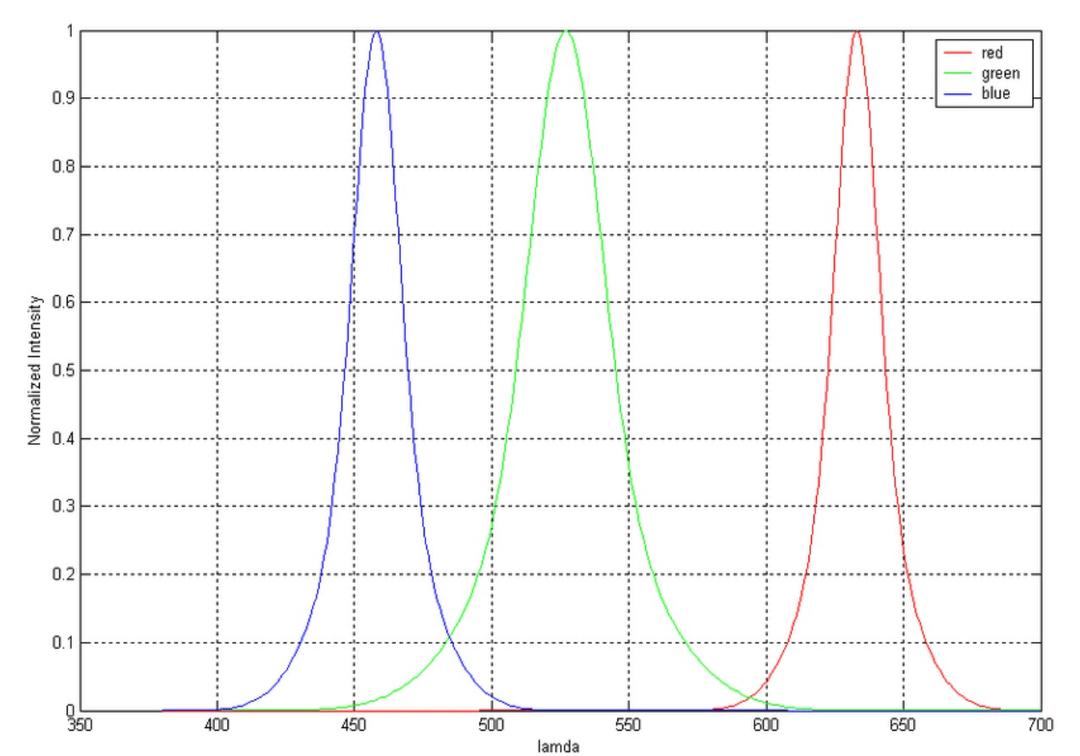
RGB spectrum: Three narrow peaks with large gaps. Objects reflecting light at wavelengths between peaks won't be properly illuminated.
RGB is designed for stage lighting, entertainment, and color effects—where the goal is creating a colored environment, not rendering objects accurately. For artificial skylights that should simulate natural daylight, you need full spectrum (4+ channel) LED systems that produce continuous spectrum light.
▶Do artificial skylights provide vitamin D?
No—and that's a feature, not a limitation.
Vitamin D synthesis requires UV-B radiation (280–315nm wavelength). LEDs in artificial skylights emit visible spectrum only, no UV. This is intentional.
You get the visual and circadian benefits of daylight without UV exposure—no skin cancer risk, no skin aging, no fading of furniture or artwork, no additional heat load from infrared. It's the good parts of sunlight without the damage.
For vitamin D, stick with dietary sources (fatty fish, fortified foods), supplements (D3 is most effective), or safe limited outdoor exposure. Don't expect any indoor lighting—artificial skylight or otherwise—to do that job.