
Originally published in the Wall Street Journal November 25, 2025
Coming to an Office Near You: Lush Balconies and Thermostats That Know You
Five experts offer their solutions to workplace-design annoyances
Key Points
What's This?
- Office designers are developing AI-powered sensors that adjust temperature and lighting based on individual preferences and meeting needs.
- Virtual reality technology will help remote workers feel more connected during hybrid meetings by creating simulated office environments.
- New office buildings feature balconies on every floor to provide workers with access to fresh air and greenery, reducing stress and improving wellbeing.
Lighting and temperature based on workers' preferences. Virtual-reality meetings that feel more real and less virtual. Buildings with lush balconies on each floor.
Employees can expect such features to show up in more offices soon, as technological innovations allow designers to address some of the biggest annoyances in workplaces today.
Office design (at least in many workplaces) has come a long way from the sea of uniform desks of the past. But each new wave has been a largely one-size-fits-all approach, not about accommodating workers' personal quirks and needs.
The coming changes are "as much about making you comfortable and feel seen as a person as they are about removing friction in the workday," says Annie Dean, chief strategy officer, building operations and experience, at real-estate services firm CBRE.
We asked six workplace-design gurus to envision how architects and employers will try to fix what irks many workers about the office today:
The problem: A floor plan mixing vast open spaces and private offices doesn't account for varying work styles
In the future: Less open space, more variety
"The outdated model is too binary: You're either in an open office or in a private office," says Ricardo Nabholz, managing associate and studio creative director at TPG Architecture, based in New York. "And you meet around a table in a conference room."
The vision emerging now, Nabholz says, is an office laid out more like a city of neighborhoods centered on plazas. Smaller open spaces with desks would be surrounded by different types of workstations, including private offices and group meeting rooms but also spaces for solo work and two-person lounges for collaborative work.
The goal is for each space to allow employees to have choices on where they think they can get their work done best.
The solo and two-person spaces would all be differentiated to suit a variety of preferences. A two-person lounge, for example, could be set up for the occupants to sit side-by-side on office chairs or bar stools facing a shared screen, Nabholz says, while another could be equipped with a pair of armchairs and side tables.
At one of Nabholz's current projects for a large global advisory firm, each plaza has roughly 12 workstations along the windows, including rooms designed to "make hybrid collaboration and individual focus actually work," he says.
For example, a meeting room is set up to eliminate glare that can make it hard for remote participants to see shared screens during a group video call. It has a screen that faces a solid wall to eliminate reflections, with blackout shades on the windows. An example of a space for individual focus is a room farther from the windows with solid walls rather than glass, to eliminate distractions.
The problem: Video calls that make remote workers feel remote
In the future: Virtual offices
Hybrid work remains popular with employees. But video calls joining people in the office with others working remotely are another matter. The intent is to foster collaboration, but it's often easy for employees working from home or from another office to feel, well, remote, and disconnected. Especially if the in-person employees are really engaged with each other during the meeting, the online participants can feel forgotten about or left out.
Improved virtual-reality technology will help address that, says Mike Iovinelli, design director at architecture firm HLW, based in New York. In-person and remote workers can all don a headset and find themselves together in a simulated office. "You're conducting business now with somebody who could be halfway across the world, but it feels like you're in the same room together," Iovinelli says.
The problem: Hermetically sealed offices
In the future: Buildings with balconies
A lot of workers end up cooped up in their office all day, never taking, or being able to take, time to step outdoors for fresh air. Making it worse: Many got used to easy outdoor access while working from home during and after the Covid pandemic.
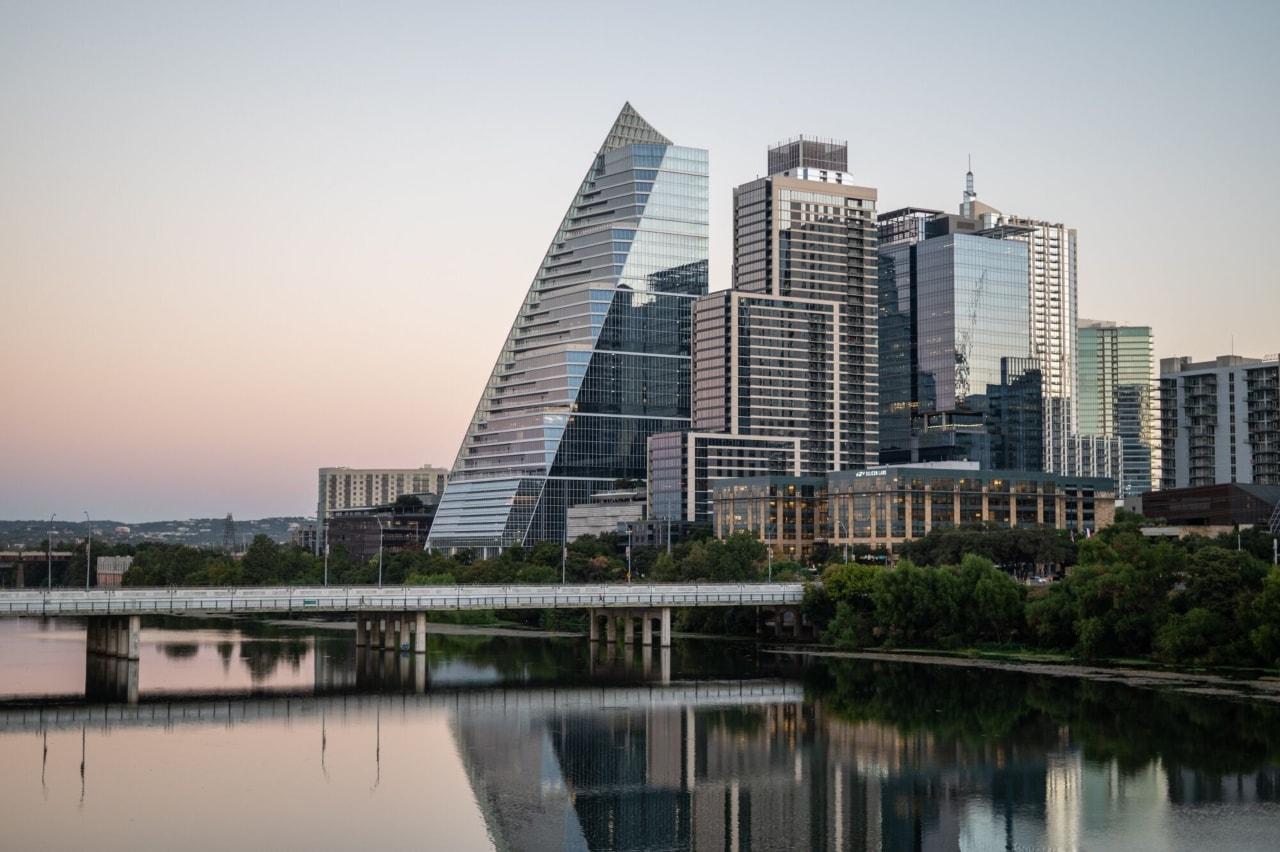
Architects and developers think terraces will address that issue. "We're seeing the demand for that as a big driver for the design of new office looks," says Rafael Pelli, partner at Pelli Clarke & Partners, an architectural firm based in New Haven, Conn., and New York City. He recently worked on a 35-story, 590-foot-tall office tower in Austin, Texas, with a balcony on every floor.
Workers can step out onto the terrace to take a break, or bring their laptop with them to work there on a nice day. (Think of the Zoom background!) Some of the balconies are enhanced with landscaping.
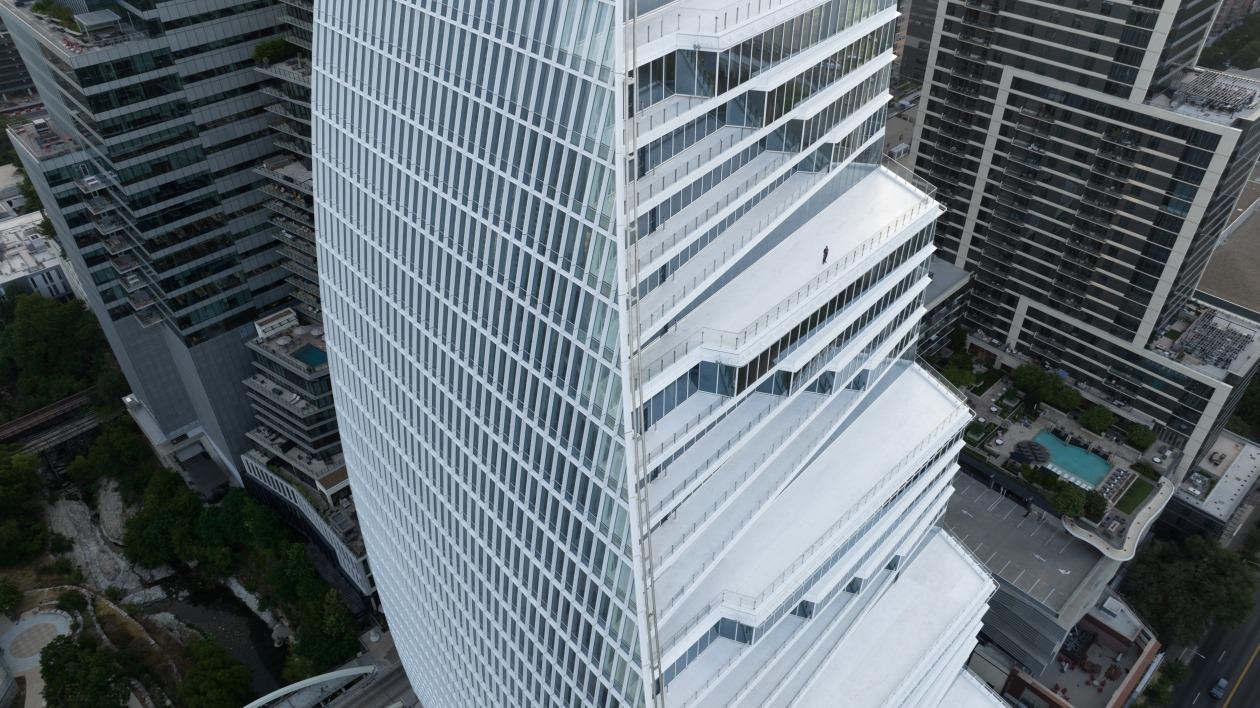
"There's a lot of research that says that a relationship to greenery and nature is something that lowers stress levels and is relaxing," Pelli says. "It can feel like you've stepped away from your office."
The problem: One-size-fits-all temperature control and lighting
In the future: Sensors that adjust to individual and group preferences
You find your office shudderingly cold, while most of your neighboring colleagues feel the temperature in theirs is just fine. Or the office lighting during a Zoom call makes you look like you're in a police interrogation room, and there's little you can do about it.
Tomorrow's buildings will do something about all that. Sensors installed throughout the buildings will use artificial intelligence to learn employees' preferences for temperature and lighting, and make adjustments automatically to suit those preferences.
"If there's going to be four people in this meeting room in the next hour and it's a Zoom meeting, it can dim the light so that Todd doesn't have a bright spot on his head" and the other participants look better as well, says Todd Heiser, a co‑regional managing principal at architecture, design and planning firm Gensler. Similarly, the room can automatically be made warmer or cooler ahead of time depending on how people using the room in the past have typically set the temperature.
The technology is already deployed across multiple projects in New York, Chicago, San Francisco and Los Angeles, including some for big technology and consulting companies, Heiser says.
Lighting and temperature can also be controlled by individuals for their separate offices. But unfortunately you still can't dim the light and turn down the heat without affecting the people around you if you're working in an open space. Any changes along those lines would require a group decision. But hey, aren't we all back in the office to collaborate?
The problem: Little to no natural light
In the future: Lighting that supports our circadian rhythms
Office workers don't get enough sunlight, stuck inside for most of the day and lucky if they are near a window.
Lighting designers and architects are in something of an arms race to create office lighting with more blue-enriched light or light with more blue-white tones. The more blue-white tones in the lighting, and the brighter it is, the more it helps support our circadian rhythms—the biological clocks inside our cells that drive our cycles of sleepiness and wakefulness.
"When our eye gets that blue light, enough of it, then it suppresses the body's melatonin production," says Jonathan Clark, chief executive of Innerscene, a San Francisco-based lighting-equipment manufacturer. "Melatonin is what makes you sleepy. The effect of the blue light is that it makes you more awake and alert."
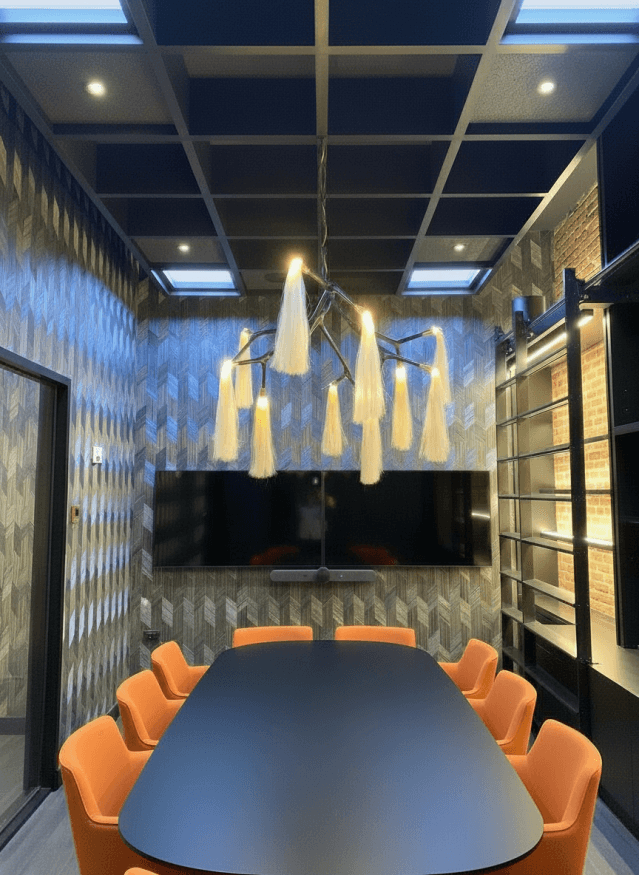
His company has been developing illumination with higher-than-usual amounts of blue-enriched light, using faux windows that give the illusion of a blue sky outside and faux skylights that show blue sky with a virtual sun. Innerscene counts a number of tech companies as office clients.
The problem: Too few quiet spaces for creative thinking—or just decompressing
In the future: Respite floors
Many of us are overloaded with technology in the office—if not on our laptops, then on our phones or in video meetings, with almost-constant updates and notifications nagging at us. It can be hard to concentrate or find somewhere to just be still or reset.
Welcome to a floor in your busy office that discourages the use of electronics and encourages slowing down to relax or think creative thoughts. What's more, the space is designed like a forest, complete with lots of wood, greenery and a waterfall.
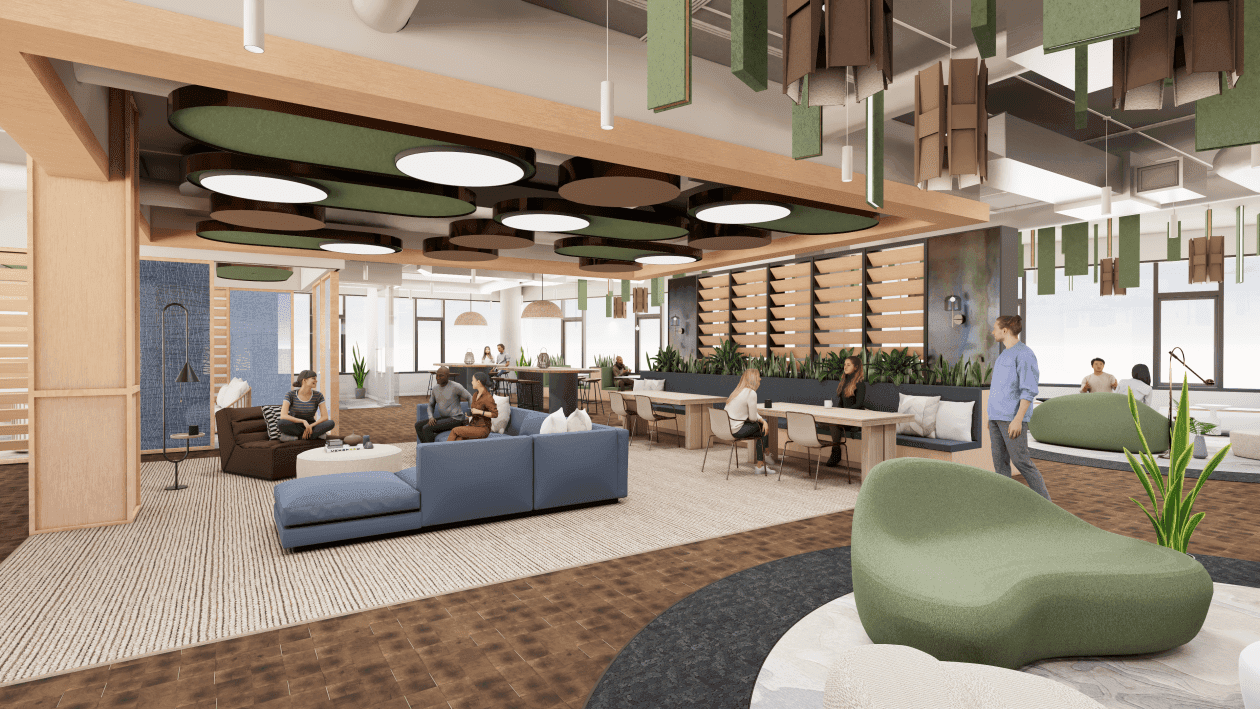
"We minimize the technology and digital screens on this floor just to encourage that feeling of respite and retreat," says Sara Rezaeian, senior designer at JPC Architects, an architecture firm based in Bellevue, Wash., referring to a project the firm is working on for a client, a large entertainment company. "You can actually concentrate your thoughts within your space."
Ray A. Smith is a staff reporter in The Wall Street Journal's New York bureau. Email him at [email protected].